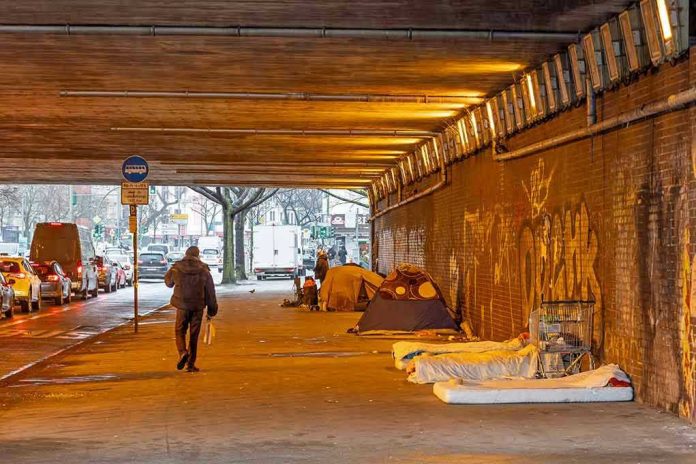
Seattle’s homelessness crisis has spiraled into visible chaos under Mayor Katie Wilson, with tent encampments and open-air drug use overwhelming parks and streets despite over $118 million in annual city spending and rushed proposals for 500 tiny homes.
Story Highlights
- King County’s homeless population surged 26% from 2022 to 2024, reaching 16,868 people, with overcrowded shelters pushing thousands onto streets
- Mayor Katie Wilson faces intense backlash from residents and businesses demanding accountability as encampments and drug activity proliferate in neighborhoods
- City council advances $5 million plan for 500 tiny homes by June while conducting sweeps of Beacon Hill parks amid public safety concerns
- Housing costs identified as primary driver, with Seattle’s skyrocketing rents creating homelessness rates five times higher than cities like Chicago despite similar poverty levels
Crisis Escalates Despite Massive Spending
Seattle committed $118.93 million to address homelessness in 2024, yet the King County Point-in-Time Count revealed 16,868 homeless individuals that year, a 26% jump from 2022. The Seattle metro area alone accounts for 9,440 of those experiencing homelessness. Mayor Katie Wilson inherited this crisis upon taking office in early 2026, immediately confronting visible encampments in public parks and open-air drug use that residents and business owners describe as uncontrolled. Local grassroots organizations and politicians now demand action, claiming city leadership has shown no accountability for the deteriorating conditions that contrast sharply with Seattle’s tech-driven wealth.
Tiny Homes Plan Advances Amid Skepticism
Wilson recently proposed allocating $5 million to construct 500 tiny homes by June, a measure the city council’s Finance Committee has advanced toward a full vote. Simultaneously, the city conducted encampment sweeps in Beacon Hill neighborhoods, clearing tent clusters from Daejon, Lewis, and Sturgus Parks. Critics question whether tiny homes can address the scale of the problem, given that shelters remain overcrowded and thousands continue sleeping outdoors. The proposal reflects the mayor’s urgency to curb visible homelessness and drug activity, but residents express frustration that previous investments through the King County Regional Homelessness Authority have failed to reverse the upward trend in unsheltered populations.
Housing Costs Drive Homelessness Surge
Seattle’s median rent climbed 41.7% from 2010 to 2017, far outpacing the national increase of 17.6%, fueled by Amazon’s headquarters expansion and gentrification pressures. Studies show West Coast cities like Seattle experience homelessness rates five times higher than Midwest cities such as Chicago or Detroit, despite comparable poverty and opioid addiction levels, pointing to housing affordability as the dominant factor. Eighty-four percent of Seattle’s homeless population lived locally before losing housing, contradicting claims that the crisis stems from migration. The city added 67,000 housing units between 2010 and 2020, but rental losses and escalating costs offset gains, leaving vulnerable residents exposed to eviction and job loss as primary triggers for street living.
Public Safety and Quality of Life Concerns Mount
Neighborhoods report deteriorating public spaces as encampments occupy parks and sidewalks, creating safety hazards from untreated mental illness and addiction. Business owners face disruptions, and families avoid parks where drug paraphernalia and tents proliferate. Racial disparities compound the crisis, with African Americans comprising 25% and Native Americans 15% of the homeless population despite being smaller shares of Seattle’s overall demographics. Long-term implications include eroded quality of life, strained municipal budgets, and deepening political divisions over whether to prioritize housing-first approaches or enforcement measures. The King County Regional Homelessness Authority, which assumed leadership of regional services in 2022, coordinates prevention and emergency response but struggles to scale solutions fast enough to match rising demand driven by economic pressures beyond city control.
Experts attribute Seattle’s crisis to multifaceted roots including mental health gaps, addiction, poverty, criminal justice system failures, and foster care shortcomings, alongside the housing cost squeeze. Researchers emphasize that housing alone cannot solve the problem without wraparound services, yet permanent supportive housing remains underfunded. The contrast between Seattle’s prosperity and its street-level decay highlights a broader failure of government to balance economic growth with safeguards for those left behind, fueling frustration across the political spectrum that elected officials prioritize reelection over tackling tough structural problems that make the American Dream unattainable for working families and the vulnerable alike.
Sources:
Seattle Human Services: Addressing Homelessness
Homelessness in Seattle – Wikipedia
King County Regional Homelessness Authority