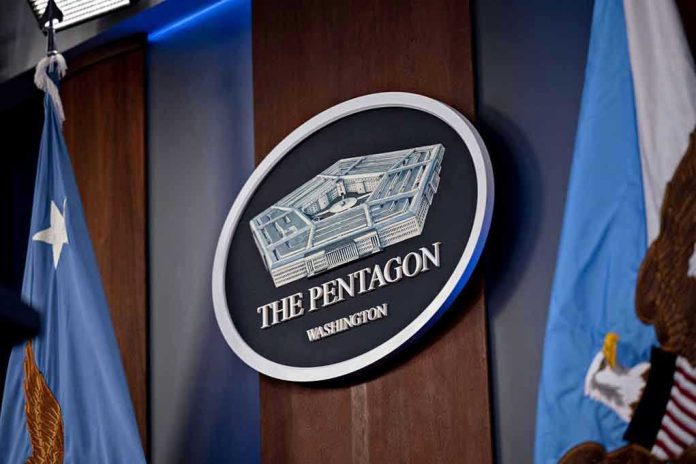
As Americans tighten budgets, the Pentagon is asking Congress for $80 billion more to fund the Iran war, with few public details and a summer deadline warning.
Story Snapshot
- Pentagon told lawmakers it needs $80 billion for Iran war costs, with funds for operations, troops, ships, and munitions [4].
- Office of Management and Budget has not submitted a formal request to Congress yet [10].
- Officials warn services could run out of operations money by summer without action [3].
- The ask would sit on top of a proposed $1.5 trillion defense budget, raising oversight concerns [1].
Pentagon’s $80 Billion Figure And What It Covers
Deputy Defense Secretary Stephen Feinberg phoned lawmakers and said the Pentagon needs about $80 billion for Iran war costs. He linked the money to wartime operations, personnel pay, ship deployments, and restocking key munitions. These categories match the bills that pile up first in any shooting war. Reports say the Pentagon has warned that services could run out of money for operations by summer without a supplemental. That puts pressure on Congress to move fast [4].
The $80 billion ask follows months of strikes and deployments. Earlier estimates pegged war costs at about $25 billion by April, before a full accounting was ready. That gap between earlier costs and today’s request reflects the price of fuel, hazard pay, ship steaming days, and precision weapons. It also reflects longer commitments at sea and in the air. The Pentagon’s categories make sense, but the public still lacks a clear line-item breakdown that shows how every dollar would be used [9].
Formal Process Lags As Congress Demands Proof
The White House Office of Management and Budget has not formally sent a supplemental package to Capitol Hill. That means there is no official, public document for lawmakers or taxpayers to review yet. Without a submission, committees cannot mark up or amend details. In April, officials also said there was no final cost estimate for the conflict, which makes the current figure look like an estimate, not a settled plan. Lawmakers want specifics before they vote [10].
Reports say the $80 billion number may be smaller than earlier internal ideas near $200 billion that ran into heavy resistance. That resistance came from both parties. Members want proof the money buys real readiness, not waste or open-ended wars. They want to see depleted stockpiles, planned replenishment rates, and delivery timelines. They also want to understand troop rotations and shipyard schedules tied to this conflict. Clear data will build trust; vague promises will not [7].
Stacked On Top Of A Record Defense Budget
The reported supplemental would sit on top of a proposed record defense budget near $1.5 trillion. That number drew sharp scrutiny from fiscal hawks and budget watchdogs. The scale raises fair questions: Are we funding the right mix of people, platforms, and weapons? Are contracts structured to deliver on time and on budget? A war supplemental can be necessary, but it should not become a blank check. Strong oversight is not anti-military; it is pro-military success [1].
After landing in PA President Trump came and spoke to reporters. I asked him about how the Pentagon is asking Congress for $80B in additional funding for the Iran war and whether he believed Americans support that given so many people are financially struggling.
He responded,… pic.twitter.com/SCeDU2jQZ3
— Hannah Brandt (@HannahBrandt_TV) June 23, 2026
Past wars teach a hard lesson. Early cost estimates often miss the mark, and overruns hit taxpayers later. Congress should demand a formal, OMB-cleared justification with line items for munitions buys, ship operations, flight hours, and personnel costs. It should require monthly reporting and a sunset date that forces a new vote if spending slips off track. Tight guardrails protect the troops at the front and families at home who pay the bill [20].
What Conservatives Should Watch Next
Watch for the formal submission to arrive with tables and timelines. Look for firm numbers on missile and bomb orders, delivery windows, and which plants will build them. Check the plan for ship deployments and maintenance so the fleet does not hollow out. Demand an audit of the April-to-now spending so we know what worked and what did not. If leaders bring proof, Congress can fund the mission. If they do not, Congress should send it back for fixes [4].
National defense is a core duty of government. It must be done with discipline and honesty. Clear goals, measured costs, and strict oversight defend both our troops and our Constitution. A targeted, audited package can keep pressure on Iran’s regime while protecting American strength. But an opaque rush risks waste and mission creep. The next move belongs to the White House budget office and the Pentagon. They owe the country full details before Congress votes [3].
Sources:
[1] Web – Pentagon Seeks $80 Billion from Congress for Iran War
[3] Web – Pentagon requests $80 billion to replenish stockpiles after Iran …
[4] Web – Pentagon tells lawmakers it needs $80 billion for Iran war costs – WSJ
[7] YouTube – PENTAGON $80B DEMAND LIVE | CRITICAL WARNING …
[9] Web – Pentagon seeks $80 billion to cover Iran war costs, reports say
[10] Web – Pentagon asks Congress for roughly $80 billion to cover cost of Iran …
[20] Web – DeLauro Statement on Reports that the Pentagon Wants $200 …