
In coastal aviation emergencies, the first reliable truths are about who, where, and when—not why. Off Mississippi’s Horn Island, six people—four adults and two children—were aboard a single‑engine Cessna that went down northeast of the barrier island; debris was found and a multi‑agency search followed. Those are the durable facts, confirmed across agencies and outlets, and they frame what matters next: how responders work such cases, what investigators look for, and why early details about cause are inherently provisional.
At a Glance
- Six occupants—four adults and two children—were on a downed single-engine Cessna northeast of Horn Island, per the U.S. Coast Guard.
- The aircraft departed New Orleans Lakefront Airport, bound for Page Field in Fort Myers, Florida.
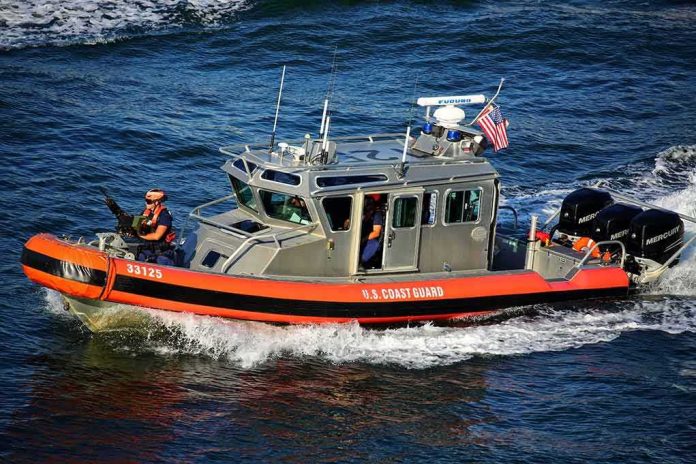
- Responders found debris including the aircraft’s cabin, life jackets, and a life raft; the search involved Coast Guard and state marine units.
- Timing and location align across reports; causal factors will be determined by the NTSB and FAA through standard investigative steps.
What happened: the confirmed spine of the event
Authorities reported that a single‑engine Cessna with four adults and two children aboard went down northeast of Horn Island in Mississippi state waters. Multiple outlets cite U.S. Coast Guard Sector Mobile as the primary source for the passenger count and location, with CNN identifying the airplane as a Cessna Centurion 210. Debris recovered by responding crews included the aircraft’s cabin structure, three life vests or life jackets, and a life raft, all consistent with an aircraft entering the water in the vicinity described—about two nautical miles northeast of the island.
Departure and destination were straightforward: the flight left New Orleans Lakefront Airport and was headed to Page Field in Fort Myers, Florida, a common general‑aviation route along or across the northern Gulf. Local reporting attributes the route and purpose to Coast Guard information relayed during the response. As for timing, accounts generally place the emergency in the mid‑afternoon; the FAA reportedly lost contact with the aircraft around 3:45 p.m., while other reports reference activity around 3 p.m., a discrepancy that often reflects the difference between last ATC contact, ADS‑B data gaps, and the first 911 or marine distress calls.
How the response unfolds on the water
When the FAA loses contact with a civil aircraft in controlled airspace and radar returns or ADS‑B indicate a likely accident, the chain of notification is crisp: controllers alert search‑and‑rescue partners, and the Coast Guard, which maintains maritime SAR responsibility, launches surface and air assets to the last known position. That is what happened off Horn Island. Mississippi Department of Marine Resources vessels joined the Coast Guard to grid and sweep drift‑informed search boxes—areas computed from probable impact coordinates, winds, surface currents, and time since last fix. The debris field’s composition—cabin section, life jackets, a raft—offered both confirmation of the event and cues to drift vectors.
General‑aviation ditchings are rare but not exotic to SAR units. In a study of motorized‑aircraft water landings from 1989 to 2022, a significant share of occupants in documented cases were rescued by Coast Guard units or nearby boats; survivability depends more on impact dynamics, restraint use, egress, and time to hypothermia than on the mere fact of water contact. That base rate context matters: even while cause remains unknown, SAR doctrine assumes survivability windows exist and prosecutes the search accordingly.
What investigators look for—and when answers arrive
From the moment an accident is reported, investigative responsibilities bifurcate. The National Transportation Safety Board (NTSB) leads the safety investigation, while the FAA supports with records, technical expertise, and regulatory context. Early in the process the NTSB issues a preliminary accident report: a short factual synopsis—aircraft type, owner, route, basic meteorology, and observed damage pattern—generally released within weeks and explicitly non‑causal. The FAA’s orders codify this handoff and the agencies’ complementary roles, including the FAA’s duty to secure facts and preserve evidence until the NTSB’s investigator‑in‑charge arrives or designates local leads.
In water accidents, the first task is to define the wreckage footprint. Investigators map and recover floating debris, then, when feasible, conduct sonar or magnetometer surveys to locate submerged structure, engine, and avionics. They will correlate those findings with air traffic control recordings, radar or ADS‑B data, and any pilot communications. Maintenance records, engine‑time logs, and recent discrepancies provide mechanical context; fuel quality, weight and balance, and any recent modifications matter for performance analysis. If the aircraft carried a portable GPS or panel‑integrated data logging, those devices can supplement sparse radar returns—the kind often encountered at low altitude over water.
The early‑detail problem: why small discrepancies surface quickly
Readers routinely encounter variations in initial reports—an aircraft “around 3 p.m.” versus “3:45 p.m.,” “Cessna 210” versus “single‑engine Cessna,” “boys 8–10” versus “8–12.” These differences do not negate the core account; they are the predictable artifact of a developing picture built from radio logs, cell‑phone witness calls, and agency updates staged while responders are still on scene. Aviation agencies sequence truth: confirm the occurrence and the rough location; verify occupants with manifests or family statements; refine type designations once tail numbers are resolved; reserve causal language for after data and wreckage converge. In this case, the shared backbone across reports—six aboard, New Orleans departure, Fort Myers destination, debris northeast of Horn Island, multi‑agency response—anchors the narrative.
Mechanisms that plausibly lead to water impact
Absent conclusions from investigators, it is still useful to understand the envelope of common failure modes on single‑engine cross‑Gulf flights. Fuel‑related events—mismanagement, contamination, or exhaustion—can force a ditching even in benign weather. Weather itself matters: low ceilings, haze over water reducing horizon cues, or convective activity along the Gulf coast can precipitate loss of control in instrument meteorological conditions. Mechanical failures of engine, propeller, or critical systems can leave a pilot with limited options; in a retractable‑gear Cessna 210, for instance, partial gear deployment during an attempted ditching can worsen deceleration forces if the gear snags the surface. Human factors—spatial disorientation over featureless water, fixation, or high‑workload task saturation—can turn a manageable abnormal into an unrecoverable upset. The job of the NTSB is to separate the plausible from the actual using evidence.
NTSB is investigating the Nov. 24 crash of a Cessna 210L near Horn Island, Mississippi.
— NTSB Newsroom (@NTSB_Newsroom) November 25, 2026
What the record will ultimately show—and why patience pays
Expect a three‑act arc. First, the preliminary report will fix the essentials: registration, pilot certificates, route, weather snapshots, and what was recovered where—useful guardrails but not findings. Second, targeted factual releases and the public docket will add texture: ATC transcripts, radar plots, maintenance and medical records, and, if recovered, component examinations. Finally, a probable cause statement will integrate these lines into a cohesive explanation and, where warranted, recommendations. The process can feel slow, but it exists to trade speculation for evidence and to ensure the next pilot benefits from what is learned. On Horn Island, as in every coastal accident, the facts that were strongest first—who, where, when—have already arrived. The why will follow the evidence to its end.
Sources:
ksl.com, aircrashdb.com, nola.com, wlox.com, faa.gov, data.ntsb.gov