A substation failure in the heart of official Washington is a reminder of something electric utilities know better than anyone: the grid that powers the world’s most consequential diplomatic and financial institutions runs through the same aging, century-old infrastructure as everyone else’s.
Key Points
- A Pepco substation event in Foggy Bottom cut power to roughly 1,100 to 1,176 customer accounts on the morning of November 2, 2026, the day before midterm elections.
- The State Department confirmed multiple facilities lost power unexpectedly; the World Bank Group confirmed its downtown office buildings were affected; George Washington University suspended classes campus-wide.
- D.C. Fire and EMS responded to smoke from multiple manholes on the 1800 block of H Street NW while Pepco crews worked the outage.
- Power was restored by early afternoon, with Pepco citing a 2 p.m. target and GWU issuing a final all-clear advisory later that day.
- No evidence ties the outage to the election, sabotage, or cyberattack; Pepco described the cause as an “event” at its I Street Substation under investigation.
What Happened in Foggy Bottom
Shortly after sunrise on Monday, November 2, 2026, Pepco crews converged on an “event” at the utility’s I Street Substation in Foggy Bottom, the dense several-block neighborhood west of the White House that houses some of the federal government’s most sensitive diplomatic real estate. Pepco’s outage map showed the number climbing toward 1,176 affected customer accounts clustered around 23rd and I Streets NW, a tight radius that nonetheless touches an outsized share of institutional Washington. By the utility’s own account, the precise cause remained under investigation even as restoration work began, with no estimated repair time initially offered to the public.
The outage was not a rolling brownout or a weather-driven line failure of the kind Pepco’s territory — serving roughly 918,000 customers across the District and suburban Maryland — experiences regularly during storm season. It was localized, sudden, and concentrated on equipment serving a neighborhood where ordinary commercial disruption carries extraordinary visibility.
The Institutions Affected
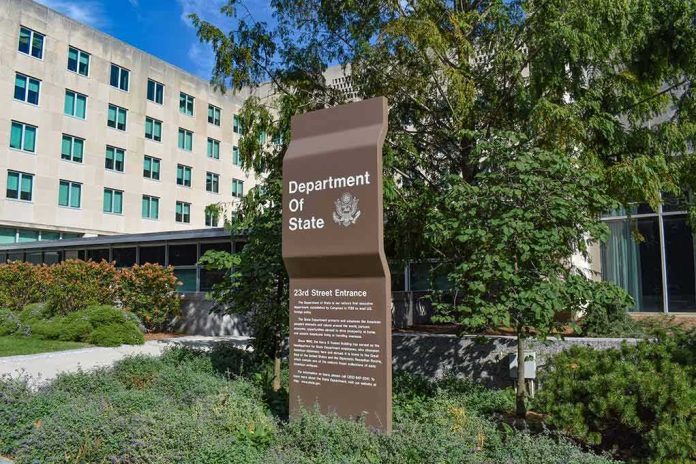
A State Department official confirmed that “multiple facilities” experienced what the department termed an unscheduled loss of electrical power, and that the department was coordinating directly with Pepco on restoration. A World Bank Group spokesperson separately confirmed that the organization’s downtown office buildings lost power as well. George Washington University, whose Foggy Bottom campus sits inside the affected footprint, reported more than 80 buildings touched by the disruption and suspended academic activity for the remainder of the day even after electricity returned, according to the university’s own campus advisory system.
The International Monetary Fund, headquartered blocks away, appeared in broader neighborhood descriptions of the outage’s reach, but no IMF spokesperson or facilities notice is cited confirming an IMF-specific power loss or operational interruption — a distinction worth holding onto, since not every prominent address in a disrupted radius necessarily lost power itself.
Smoke From the Manholes
D.C. Fire and EMS crews responded to smoke emerging from multiple manholes in the 1800 block of H Street NW, near the Farragut West Metro station, while Pepco worked to isolate the fault and address power surges in the area. That detail generated the most dramatic imagery of the morning, and some coverage escalated it into claims of a manhole explosion directly outside the World Bank. The firmer, fire-department-sourced account describes smoke — not a confirmed detonation — and the available record does not establish whether the smoke was the cause of the substation event, a downstream symptom of the same failure, or a related but separate occurrence in the underground duct network that links substations to surrounding buildings.
Why Urban Substations Fail Like This
Foggy Bottom’s electrical infrastructure, like much of downtown Washington’s, runs through a dense underground network of ducts, vaults, and manholes feeding buildings that were never designed with today’s load in mind. Underground cable faults are a well-documented cause of urban outages: insulation breakdown, moisture intrusion, or equipment aging inside a vault can produce arcing that vents as smoke through the nearest manhole cover long before anyone aboveground sees a visible flame. The District’s own prior reviews of Pepco reliability have flagged equipment and infrastructure failure as a recurring, established cause of service interruptions, distinct from the storm-driven outages that dominate public attention. A substation “event,” in utility parlance, is a deliberately imprecise term pending diagnosis — it covers everything from a failed transformer to a protective relay tripping on a fault elsewhere in the circuit.
The Election-Eve Coincidence
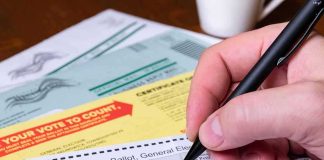
The timing — one day before a midterm election, in the neighborhood housing the State Department — invited speculation that the outage was something other than ordinary equipment failure. That inference does not hold up against what Pepco and emergency officials actually reported: the utility described an equipment-related event under investigation, officials indicated no sign of foul play, and nothing in the public record connects the outage to voting infrastructure, which in the District is operated independently of Pepco’s distribution grid and was not reported as affected. Coincidental timing is not causation, and a localized substation fault affecting roughly one-tenth of one percent of Pepco’s total customer base is, on its own terms, an ordinary — if locally disruptive — infrastructure event.
A power outage struck Washington D.C.'s Foggy Bottom neighborhood, knocking out power to the State Department, the World Bank, and the IMF, just one day before the midterm elections. Social media immediately connected it to the cyberattacks on European supermarkets and alleged… https://t.co/zpzkj6Y2Xa
— Dark Chronicles (@DarkChronicles0) November 3, 2026
What the Recovery Timeline Shows
Pepco told customers to expect restoration by 2 p.m., and subsequent reporting confirmed power was back by early afternoon, with GWU issuing a final advisory lifting its outage status later that day. The university nonetheless kept classes suspended through the end of the day — a reminder that restored electricity does not instantly restore normal operations for an institution that had to cancel schedules, secure buildings, and account for research equipment and life-safety systems on backup power in the interim. For the State Department and World Bank, both of which operate extensive continuity-of-operations protocols for exactly this kind of unscheduled disruption, a few hours without commercial power is disruptive but well within the tolerance such protocols are built to absorb.