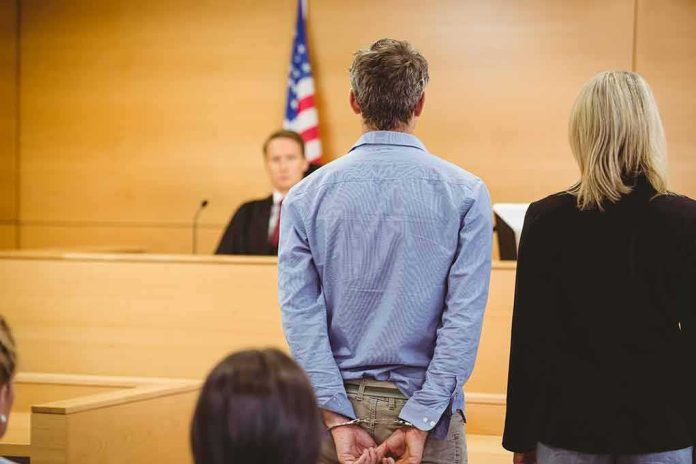
A guilty plea entered without any deal from prosecutors is, in the language of the law, the closest thing to an unqualified admission a court can record — and that is exactly what Colt Gray gave a Barrow County judge when he stood before the survivors and families of the Apalachee High School shooting and accepted responsibility for all 55 counts against him.
Key Points
- Colt Gray, now 16, pleaded guilty on July 24, 2026 to all 55 counts stemming from the September 4, 2024 shooting at Apalachee High School in Winder, Georgia, which killed two students and two teachers and wounded nine others.
- The plea was non-negotiated — entered with no agreement from prosecutors on sentence — leaving punishment entirely to the judge’s discretion after hearing aggravating and mitigating evidence.
- Georgia bars capital punishment for juveniles, so Gray faces a range from life with parole eligibility to life without parole; legal analysts widely expect the harsher term given the scale of the crime.
- Gray’s father, Colin Gray, was separately convicted in March 2026 on charges tied to giving his son the rifle used in the attack despite prior warnings — one of the rare instances of a parent held criminally liable for a school shooting.
- The plea closes the question of guilt but shifts the remaining legal and public debate toward sentencing, mitigation, and the broader failures — school, law enforcement, and parental — that preceded the attack.
What Happened in Barrow County Superior Court
On the Friday hearing, Gray entered what Georgia courts call a non-negotiated plea and sentencing proceeding — meaning he pleaded guilty to the entire 55-count indictment without prosecutors offering any concession on the number or severity of charges, or on the eventual sentence. The New York Times described it as the plea that closed out “the most lethal school shooting in the state’s history,” ending a case that had been headed toward an October jury trial before Gray’s attorney signaled the change in direction earlier in July. NBC News and other outlets confirmed the same core fact: 55 counts, one plea, no deal.
The indictment itself reads like a ledger of a single, catastrophic act stretched across dozens of individual legal injuries. Counts covered malice murder, felony murder, aggravated assault, aggravated battery, and cruelty to children in the first degree — charges tied not only to the four people killed but to every student and staff member present in the classroom and hallway where Gray opened fire. Prosecutors laid out counts for adults grazed by gunfire, for children who witnessed the shooting without physical injury, and for a student in the hallway threatened at gunpoint. That granularity is standard practice in mass-casualty indictments: each named victim generates a distinct set of charges, which is how a single shooting produces dozens of counts.
The Mechanics of a Non-Negotiated Plea
A negotiated plea trades an admission of guilt for a concession — fewer counts, a recommended sentence, a promise the state won’t seek the maximum. A non-negotiated plea strips that bargain out entirely. The defendant admits everything charged and throws himself on the mercy of the court, with the judge alone deciding the sentence after hearing from both sides. That structure explains why the July hearing spent so much time on Gray’s competency and voluntariness rather than on any factual dispute: the judge confirmed, on the record, that Gray understood he was waiving his right to a jury trial, to confront witnesses, and to appeal, and that he was not impaired by drugs, alcohol, or the psychiatric medication he was taking. Independent reporting corroborated that the plea carried no prosecutorial concession whatsoever.
This is a meaningful legal distinction for readers unfamiliar with criminal procedure. Guilt was never seriously contested in this case — Gray was captured at the scene, and the evidentiary record, including surveillance footage the court agreed to consider without replaying, was overwhelming. What remained open, and what a non-negotiated plea deliberately leaves open, is punishment. Georgia law forbids executing a juvenile offender, so the sentencing range runs from life with parole eligibility to life without parole. Legal analysts following the case widely expect the judge to impose the harsher of the two, given the number of victims and the aggravating circumstances the prosecution is expected to present.
The Shooting, the Warnings, and the Father’s Conviction
The attack occurred September 4, 2024, when Gray, then 14, opened fire inside a classroom at Apalachee High School, killing math teachers Richard Aspinwall and Cristina Irimie and students Christian Angulo and Mason Schermerhorn, all reportedly 14 years old at the time of the students’ deaths, and wounding nine others. The case drew national attention not only for its toll but for what preceded it: a May 2023 visit from the Jackson County Sheriff’s Office after online threats attributed to Gray, a teacher’s email flagging concerns about his behavior that never reached colleagues, and a rifle given to him as a Christmas gift by his father, Colin Gray.
Colin Gray’s separate criminal exposure sharpened the case’s significance well beyond one family’s tragedy. A Barrow County jury convicted him in March 2026 on charges including second-degree murder and involuntary manslaughter, concluding he had ignored repeated warning signs and failed to secure the weapon his son later used. That verdict — one of only a handful nationally in which a parent has been held criminally liable for a school shooting committed with a firearm they provided — established a companion legal precedent running alongside Colt Gray’s own case, and it will likely inform how prosecutors argue aggravating factors at his sentencing.
Survivors who were shot and relatives of those who were killed delivered emotional victim impact statements after Colt Gray, now 16-years-old, pleaded guilty to murder and other crimes in the 2024 shooting at Georgia’s Apalachee High School. https://t.co/ryq4moy5sa pic.twitter.com/1aWwM8TsaQ
— KOKH FOX 25 (@OKCFOX) July 25, 2026
Victim Impact and What Sentencing Will Weigh
Because the plea removed guilt from dispute, the hearing turned quickly to victim impact statements — testimony that will carry real weight when the judge sets a sentence. Family members of Mason Schermerhorn spoke directly to the court, describing him as a compassionate advocate for classmates with exceptional needs and rejecting any suggestion that his death should be met with leniency. One relative told the court she had “lived 688 days so far of a sentence with no parole” and argued Gray should receive the same. That kind of testimony is not incidental theater; under Georgia sentencing practice, victim impact evidence is formally part of the record a judge weighs alongside mitigation arguments concerning Gray’s age, upbringing, and documented mental health history.
ABC News reported that survivors and families spoke out in court as Gray listened, underscoring that the human toll of the case — not any residual legal question about who pulled the trigger — is now the central focus. NBC’s own account of the hearing noted that sentencing, unlike the plea itself, remains entirely in the judge’s hands, with no fixed number attached to the admission of guilt. That is the defining fact of where this case stands: culpability is settled; consequence is not.
Why This Case Will Keep Mattering
Mass-shooting prosecutions involving juvenile defendants rarely resolve as cleanly as this one has on the question of guilt. Competency challenges, coerced-confession claims, and contested identification are the norm in contested cases; none of that surfaced here. What the Apalachee case will continue to inform, long after sentencing is handed down, is the harder policy conversation it forces: how schools handle fragmented warning signs, how parents are held accountable for firearm access, and how a state with permissive gun-purchase laws — no background check or permit required for the rifle in question — reckons with the aftermath of the deadliest school shooting in its history. The plea closed one chapter. The sentencing, and the accountability questions radiating outward from it, are the chapter that endures.
Sources:
bbc.com, nbcnews.com, youtube.com, wrdw.com