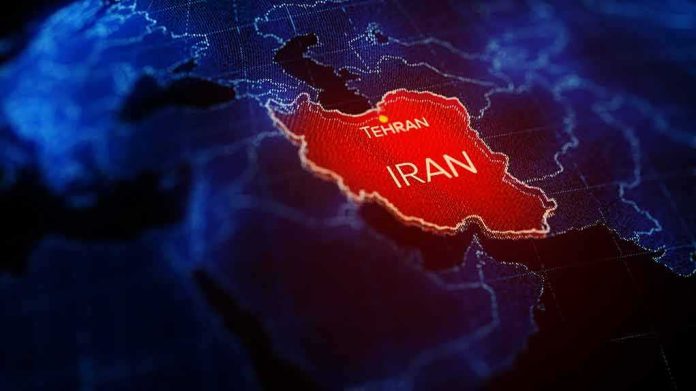
The latest U.S. sanctions on Iran’s banking system are not a narrow penalty on a handful of firms; they are part of Washington’s longstanding strategy to turn financial isolation into strategic pressure, cutting off the channels Iran uses to fund nuclear work, missile development, proxy networks, and other regional activity.
Intro Header
- The Treasury Department identified Iran’s financial sector under Executive Order 13902 and sanctioned 18 major Iranian banks in one action.
- U.S. officials said the purpose was to deny Iran financial resources tied to nuclear, missile, terrorism, and malign regional activities.
- The move fits a larger pattern: Washington has repeatedly used banking sanctions to target Iran’s access to dollars, correspondent banking, and the international financial system.
- The central dispute in this policy area is not whether sanctions were imposed, but how much bank-specific evidence is publicly visible versus held in government files and enforcement records.
How the Sanctions Work: Banking as a Pressure Point
Iran’s banking system matters because modern sanctions bite through payments, not just trade bans. When Treasury identifies a sector under E.O. 13902, it can impose sanctions on Iranian financial institutions and, by extension, on non-Iranian parties that continue to do business with them. That is the mechanism that gives this kind of action real force: it does not merely freeze assets in the United States, it raises the cost of touching the sanctioned network anywhere in the global banking chain. KPMG’s summary of OFAC’s 2020 action captures the practical effect bluntly: the designations were intended to make unauthorized cross-border business nearly impossible.
This is why banking sanctions have such disproportionate leverage. A bank is not just another company; it is the circulatory system through which trade finance, currency conversion, and settlement flow. Once a bank is cut off from correspondent relationships or threatened with secondary sanctions, ordinary commerce becomes harder to clear, insure, finance, and price. Treasury’s own language in 2020 framed the Iranian financial sector as “an additional avenue” funding malign activity, which is a policy way of saying that finance itself had become part of the security apparatus.
What Treasury Said About the Targeted Banks
Treasury’s case was explicit, not subtle. In announcing sanctions on 18 major Iranian banks, it said the action was designed to deny the Iranian government resources used to fund and support nuclear work, missile development, terrorism and terrorist proxy networks, and malign regional influence. Reuters’ reporting on earlier Iran-related banking actions shows the same logic repeated over time: Treasury has long treated Iranian banks as conduits for proliferation, terrorism support, and sanctions evasion, not as neutral commercial intermediaries. The continuity matters, because the 2020 action did not emerge from nowhere; it extended a policy architecture that had already been used against the Central Bank of Iran and other institutions.
The official record also shows why the sector was singled out. Treasury and OFAC have repeatedly described Iranian banks as facilitators of transfers for designated entities, including the IRGC-Qods Force and firms tied to weapons proliferation. In one 2026 action, the State Department said Iranian financial and shipping networks were moving billions of dollars annually from oil and petrochemical sales to support military operations and regional proxies. The names, dates, and legal authorities change from round to round; the theory of the case does not. Washington is trying to starve a state-linked financial ecosystem that it believes sustains strategic programs and regional coercion.
The Long History Behind This Pattern
Seen in context, this is classic Iran sanctions policy. Treasury has been tightening financial restrictions on Iran for well over a decade, including the 2011 finding that identified Iran as a jurisdiction of primary money laundering concern and called out the Central Bank of Iran and the wider sector for terrorist financing, proliferation financing, and money laundering risks. Earlier measures targeted banks such as Bank Saderat and Bank Tejarat for alleged support to militant groups or WMD-related activity. The policy has never been limited to one administration; it has accumulated layer by layer, each action narrowing another route by which Iranian institutions could reach dollars, settle trades, or maintain access to foreign banks.
That history explains why the 2020 sanctions were described as one of the most extensive such moves in months. Treasury was not merely punishing a discrete misconduct case; it was hardening an already restrictive regime into something closer to a financial quarantine. The legal tools matter here. OFAC’s Iran sanctions framework, CRS’s summaries, and Treasury’s own notices show that the United States has built a system in which operating in Iran’s financial sector can itself trigger sanctions exposure, even for non-Iranian actors. That is the real significance of the action: it extends the perimeter of risk far beyond Iran’s borders.
Where the Public Debate Actually Sits
The sharpest disagreement in this policy area is not over whether Treasury acted; it is over what can be verified publicly. U.S. officials present the sanctions as a response to documented support for proliferation, terrorism, and destabilization, and the published notices give a broad rationale for that view. Critics, by contrast, focus on the opacity of the evidentiary record and the sweeping nature of sector-wide sanctions, arguing that public explanations often stop at general security claims rather than bank-by-bank proof. That tension is longstanding, but it does not amount to a factual rebuttal of the sanctions themselves. It is a debate over transparency and proportionality, not over whether the action happened.
There is also a practical point that often gets lost in headline treatment: sanctions are not proof of criminal liability, nor are they equivalent to a court judgment. They are policy instruments, and in the Iran case they have often been used preemptively to block future transactions the U.S. government believes will aid prohibited activity. That is why the language of Treasury releases is so heavily forward-looking—deny resources, disrupt funding, isolate the sector—rather than retrospective and forensic. The point is to sever capability before it is converted into missile parts, illicit transfers, or proxy financing.
What These Sanctions Mean in Practice
For Iran, the consequence is cumulative strangulation rather than one dramatic blow. Each new designation makes it harder for banks, exchange houses, shipping firms, and front companies to find clean counterparties, and it pushes more activity into shadow channels that are costlier, slower, and easier to monitor. For foreign banks and businesses, the message is simpler still: touching Iran’s sanctioned financial web can threaten access to the U.S. financial system. That is why the effects of these measures spread far beyond the immediate targets and why Treasury continues to use them even when the public record shows only part of the underlying intelligence picture.
The enduring pattern is clear. Washington uses finance as a strategic weapon because the modern international economy runs through banks, and banks run on access. Iran’s institutions remain vulnerable to that pressure because they sit at the junction of state policy, trade settlement, and sanctions evasion. The latest designations reaffirm the basic logic of the campaign: if Iran’s government uses its financial sector as an operational instrument, the United States will treat that sector as a battlefield.
Sources:
cbsnews.com, home.treasury.gov, bbc.com, reuters.com, state.gov, kpmg.com, sanctionsnews.bakermckenzie.com, en.wikipedia.org, ofac.treasury.gov, congress.gov, cliffordchance.com