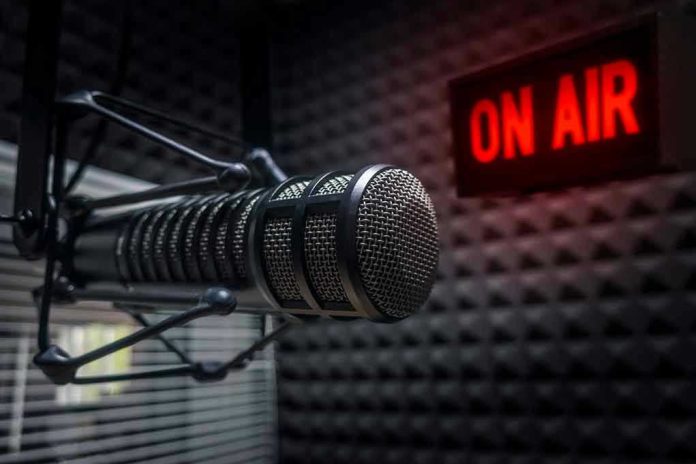
Joe Rogan criticizes media for focusing on celebrity controversies while significant issues like freedom of speech in the UK go underreported.
Story Snapshot
- Joe Rogan calls out media priorities on his podcast
- UK government arrests individuals for online speech
- Media coverage of Jimmy Kimmel overshadows critical issues
- Debate on the balance between free speech and regulation intensifies
Joe Rogan’s Critique of Media Priorities
Joe Rogan, the influential podcast host, recently spotlighted a glaring issue in media reporting: the tendency to focus on celebrity drama at the expense of more pressing matters. On his podcast, Rogan criticized the disproportionate attention given to comedian Jimmy Kimmel’s controversies compared to the significant issue of the UK government’s arrests of individuals for online speech. This critique is not just about media priorities but calls attention to the potential normalization of censorship, a concern for those valuing free expression.
The media’s fixation on entertainment controversies, Rogan argues, distracts from pressing threats to civil liberties. While Kimmel’s media coverage intensifies, stories about the UK authorities arresting people for online speech slip through the cracks. This juxtaposition highlights a critical commentary on media culture and its implications for global free speech. Rogan’s arguments have stirred public debate, prompting listeners to reconsider what truly deserves headline status.
UK’s Approach to Online Speech
The UK has a longstanding legal framework aimed at regulating online speech, with laws including the Communications Act 2003 and the more recent Online Safety Bill. These laws have led to several high-profile cases where individuals were arrested or prosecuted for offensive social media posts. Critics argue these laws infringe on civil liberties, setting a concerning precedent for democratic societies. These developments are particularly alarming in the context of increasing governmental overreach worldwide.
Recent reports highlight ongoing enforcement of these regulations, as UK citizens face legal consequences for online expressions deemed offensive. These actions raise significant concerns about the balance between preventing harm and protecting free speech, a debate that echoes across the Atlantic and resonates with free speech advocates and civil liberties organizations. The chilling effect on online expression is a looming threat that demands attention, yet often remains overshadowed by sensational celebrity news.
The Role of Media in Shaping Public Discourse
Media outlets wield substantial power in shaping public perception and discourse. By prioritizing sensational celebrity stories over substantive issues like governmental overreach, media effectively sets the public agenda. This power dynamic is crucial to understanding why some stories gain traction while others remain underreported. Rogan’s critique underscores the need for media to refocus on issues with real societal impact, rather than indulge in the spectacle of celebrity drama.
In the US, media often faces criticism for its fixation on entertainment at the expense of more serious news. This trend not only influences public priorities but also impacts political and social discourse. As Rogan points out, the media’s choices reflect broader societal values and priorities, raising questions about what truly matters in public life. The debate over media responsibilities is not new, but Rogan’s spotlight on this issue brings it to the forefront once again.
Implications for Free Speech and Society
The debate over online speech and censorship has significant implications for both short-term and long-term societal dynamics. In the short term, it fuels public discussion about freedom of expression and the role of government in regulating speech. In the long term, it could lead to a chilling effect on online expression, particularly in countries with stringent regulations like the UK. This effect could influence US policy debates, as policymakers observe international precedents.
For individuals and communities, the impact is tangible. UK social media users may find themselves self-censoring to avoid legal repercussions, while US public figures face heightened scrutiny. The broader public, meanwhile, grapples with the consequences of restricted access to diverse viewpoints and the stifling of free expression. These developments underscore the importance of vigilant media coverage and public engagement in protecting fundamental freedoms.
Sources:
Mix 93.3 summary of Rogan’s remarks and context