Trump’s marathon rant about a “hostile” China hints at a geopolitical chess match where the stakes—trade, technology, and global influence—are shifting faster than most Americans realize.
Story Snapshot
- Trump’s blunt condemnation of China reflects escalating U.S.-China tensions.
- “Very strange things are happening in China” signals deep uncertainty about Beijing’s internal dynamics.
- Geopolitical fallout ripples through global markets, U.S. business, and diplomatic circles.
- Experts warn of profound long-term consequences for the world economy and international security.
Trump’s Marathon Rant Ignites New Fears Over China’s Direction
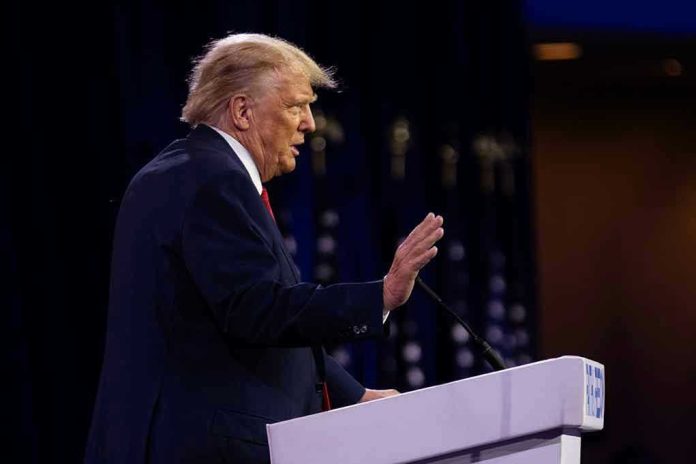
Donald Trump’s recent tirade targeting China has set off alarm bells across diplomatic and business communities. His characterization of China as “hostile” and his cryptic warning that “very strange things are happening in China” have injected fresh anxiety into the already fraught relationship between the world’s two largest economies. Trump’s remarks, delivered with trademark bombast, reflect longstanding grievances over trade imbalances, intellectual property theft, and military posturing in the South China Sea. By painting China as erratic and unpredictable, Trump is leveraging American skepticism and channeling populist frustration into a broader narrative about global instability.
Wall Street immediately felt the tremors. Following Trump’s rant, the Dow plunged 500 points, underscoring how sensitive markets have become to any hint of deteriorating U.S.-China relations. Investors, already jittery from ongoing trade negotiations and technology sector disputes, scrambled to reassess risks. Business leaders voiced concern about supply chain disruptions and the possibility of new tariffs. Many analysts interpreted the market’s reaction as a signal that economic uncertainty is escalating, with both American and Chinese firms bracing for impact.
Historical Context: Why Trump’s Attacks Resonate with Americans
The roots of Trump’s animosity towards China stretch back years. During his presidency, he launched a full-scale trade war, imposing tariffs and accusing China of unfair practices. These policies resonated with American workers who felt left behind by globalization, and they remain central to Trump’s political identity. The COVID-19 pandemic intensified mutual suspicions, with each side blaming the other for economic fallout and public health failures. China’s assertiveness in the South China Sea and its increasing clampdown on internal dissent have only fueled American fears of a rising superpower unwilling to play by international rules.
Trump’s rhetoric, although divisive, taps into a bipartisan unease about China’s ambitions. Both Republican and Democratic leaders have adopted a tougher stance, wary of Beijing’s technological advances and its efforts to expand influence across Asia and Africa. For many Americans, China represents not just economic competition, but a fundamental challenge to democratic norms and Western values. Trump’s marathon rant is a reminder that this rivalry is not just about trade, but about the future direction of global leadership.
Global Impacts: What “Strange Things” in China Mean for the World
Trump’s vague warning about “strange things” in China has sparked speculation among analysts and diplomats. Some interpret it as a reference to recent purges within the Chinese Communist Party, mysterious disappearances of top officials, or sudden shifts in economic policy. Others see it as a nod to China’s tightening control over technology, media, and civil society—a trend that has alarmed human rights advocates and foreign governments alike. Whatever the specifics, these developments signal that China is recalibrating its internal and external strategies, raising the risk of miscalculation or confrontation.
Trump Slams 'Hostile' China in Marathon Rant: 'Very Strange Things Are Happening in China!' https://t.co/alWs7avyY0
— Mediaite (@Mediaite) October 10, 2025
Internationally, Trump’s comments are being scrutinized for their potential to influence U.S. policy. Allies in Europe and Asia are watching closely, worried about being caught in the crossfire if tensions escalate. Some experts warn that a new Cold War dynamic is emerging, with countries forced to choose sides or navigate a more fragmented global order. The technology sector, especially, stands on the front lines, as both Washington and Beijing move to restrict access to critical infrastructure and intellectual property.
Expert Analysis: Long-Term Consequences and Conservative Common Sense
Economic experts caution that the prolonged standoff between the U.S. and China could trigger recessionary pressures worldwide. Trade wars, currency fluctuations, and supply chain uncertainties are already reshaping corporate strategies and consumer prices. Diplomats urge dialogue and restraint to avoid accidental escalation—a message that aligns with the pragmatic values of American conservatism, which favor stability and strong national defense. Security analysts highlight the possibility of military conflict over Taiwan or the South China Sea, urging policymakers to prepare for worst-case scenarios.
From a conservative perspective, Trump’s warnings should not be dismissed as mere bluster. They reflect legitimate concerns about American competitiveness, technological leadership, and the integrity of democratic institutions. Common sense dictates vigilance, negotiation, and strategic investment in defense and innovation. As “very strange things” continue to unfold in China, Americans must remain alert, informed, and ready to adapt to an increasingly unpredictable world.
Sources:
Trump Slams ‘Hostile’ China in Marathon Rant — Yahoo News
‘Real surprise’: Trump drops massive rant on ‘hostile’ China — Raw Story
Dow plunges 500 points after Trump blasts ‘hostile’ China — NY Post