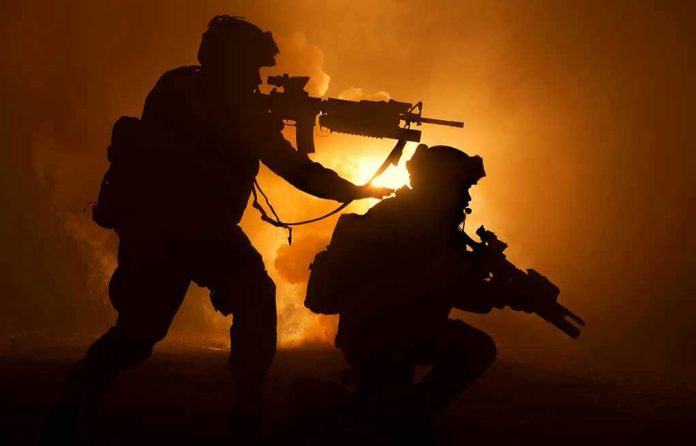
A new wave of technological advancements in firearms threatens to reshape military power, sparking debates on their impact on warfare.
Story Overview
- Eight major technological shifts in firearms have redefined military strategies.
- Each technological revolution has transformed warfare tactics and logistics.
- Modern developments focus on precision, integration, and ergonomics.
- Technological advancements continue to impact state power and military institutions.
The Evolution of Firearms Technology
Firearms technology has undergone eight defining revolutions, starting with the invention of gunpowder in China during the Tang-Song era. This innovation laid the groundwork for the development of hand-held firearms by the 13th century. European armies adopted gunpowder artillery and early firearms in the 15th century, leading to a gradual transition from traditional weaponry like bows and armored cavalry. These early firearms, although rudimentary, were pivotal in undermining the power of feudal knightly elites and empowering centralized states.
The Industrial Revolution marked another significant leap, introducing interchangeable parts and mass production of more reliable muskets and rifles. Innovations like the Minié ball and rifled muskets extended effective ranges and made traditional dense formations obsolete. The introduction of Hiram Maxim’s fully automatic machine gun in 1884 and smokeless powder further transformed battlefields by providing continuous firepower that favored defensive strategies, significantly influencing World War I tactics.
Technological Advancements Shaping Modern Warfare
Recent technological trends in firearms emphasize precision, integration, and ergonomics over sheer firepower. Advances in materials like polymers and lightweight alloys have reduced weapon weight, while improved optics and fire-control systems offer enhanced targeting capabilities. The modularity of modern firearms allows for customization with accessories such as lights, lasers, and suppressors. Experimentation with caseless ammunition and smart munitions suggests a future where precision and information integration play crucial roles.
Contemporary military doctrine increasingly views firearms as nodes within a broader information network, highlighting the importance of drones and sensors. This shift reflects a growing recognition that information and sensing capabilities are as vital as the firearms themselves in modern warfare. Such changes underscore the cumulative nature of revolutions in military technology, where incremental improvements yield substantial impacts when combined with new tactics and manufacturing techniques.
Impact on Warfare and State Power
The eight revolutions in firearms technology have had profound short-term and long-term impacts on warfare and state power. Initially, gunpowder enabled armies to breach fortifications and challenge heavily armored forces, reshaping social hierarchies and contributing to the rise of centralized, tax-raising states. Subsequent advancements, such as lock mechanisms like the flintlock, standardized firearms use and supported new military tactics like line infantry formations.
The percussion cap and rifling increased firearms’ range and reliability, driving the adoption of loose formations and entrenchments. Breech-loading and repeating firearms revolutionized rate of fire and skirmish tactics, deepening reliance on industrial logistics. Machine guns provided overwhelming defensive firepower, prompting new doctrines like infiltration tactics and combined arms warfare. Modern precision weapons continue to evolve, emphasizing soldier lethality via optics and information in response to urban and irregular warfare demands.
Sources:
A Giant-Sized History of Warfare and Military Technologies
Revolutions in Technology: A Consideration of the Role of Iterative Improvement
8 Revolutions in Firearms Technology That Changed Warfare