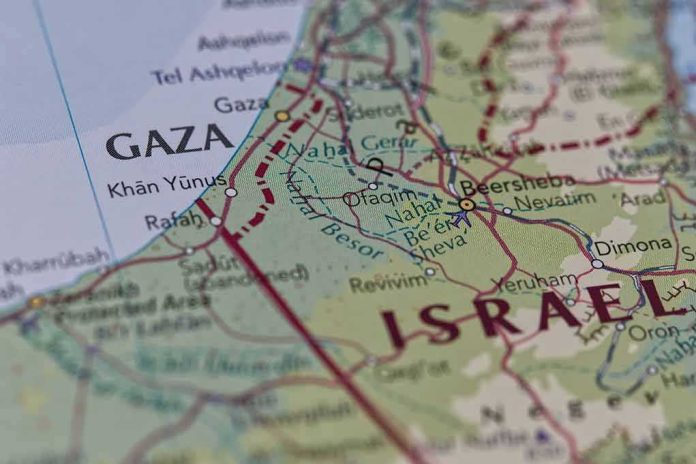
When charitable ambition collides with conflict-zone reality and polarized audience expectations, intent is not the deciding factor—fit and credibility are; that is why a well-funded, well-meaning plan for a free café in Gaza unraveled within days, and why its partner says it will press on anyway.
The Short Version
- Heretic, a Portland coffee nonprofit, withdrew from a joint plan to fund a free café in Gaza and said it would refocus locally, citing concerns and its own poor initial framing.
- The campaign had raised roughly $38,000–$39,000 toward a $100,000 goal at the time of Heretic’s exit, underscoring that this was more than a vague idea.
- Humanite Peace Collective says it will continue the Gaza café initiative independently with funds already raised and future donations.
- The backlash and confusion track a broader pattern: cause-linked branding draws criticism when the concept appears misaligned with crisis needs, power dynamics, or local context.
What happened: an organized campaign, a rapid reversal, and a split
Heretic publicly announced a partnership with Humanite Peace Collective to raise $100,000 for a Gaza café and community hub—“Department of Peace”—intended to provide free food and drinks and jobs support. Within a week, after intense reaction to the rollout, Heretic’s owner said the nonprofit was ending the collaboration and redirecting its energy “closer to home,” while also faulting his own communication for sowing confusion. Local reporting shows the fundraiser had already amassed close to $39,000 when Heretic disengaged, a detail that matters: donors had rallied to a concrete target with named partners and a stated operating model, not a loose aspiration.
In the same breath that confirmed the exit, Heretic emphasized two points: that concerns and frustrations emerging after the announcement were taken seriously—and that the decision to part ways with Humanite had been reached earlier in the week. Humanite, for its part, indicated it would carry the project forward with the funds on hand and future contributions. The bottom line is straightforward: one partner left; the other intends to execute the concept anyway.
Mechanism and feasibility: what it takes to run a “free café” in a war zone
Stripping away the branding and controversy, a free café in Gaza is a logistics enterprise. It would require reliable access to ingredients and potable water; physical security for staff and patrons; uninterrupted power or backups to run refrigeration and brewing; procurement and import permissions; local staffing and payroll; and an auditable system for free distribution that is dignified, safe, and resistant to diversion. None of these are abstract hurdles in a place where movement is restricted, infrastructure is damaged, and supply chains are fragile. The reporting that’s public-facing does not include the kind of feasibility memo—permit pathways, vendor lists, contingency sourcing, and insurance—operators in humanitarian contexts typically assemble before launch. That omission doesn’t prove impossibility; it does make donor confidence more contingent on trust than on plan detail.
The proposed model—free meals and drinks, employment support, a cultural hub—positions the café as both a relief node and a community space. Done well, such places can stabilize a neighborhood and reduce friction by meeting everyday needs without stigma. Done poorly, they can concentrate risk, become flashpoints, or simply drain funds through high fixed costs better spent on direct food distribution. The difference lies in granular operational design and credible local partnerships—elements the public record, as yet, does not surface in depth.
Why the rollout faltered: message, alignment, and the backlash pattern
Heretic’s own account centers on misframing—an admission that the initial communication failed to explain the concept and its safeguards. But the speed and intensity of the response also reflect a recurring pattern in cause-linked branding: audiences judge not only the intent but the fit between sponsor, tactic, and crisis. Academic and industry analyses have documented how brand-social-responsibility and humanitarian-branded efforts draw rejection when they appear tone-deaf to local identity, insufficiently serious for the gravity of the crisis, or too centered on benefactors rather than affected communities. A café—iconically convivial, even leisurely—can read as mismatched when basic shelter, food security, and medical care are under strain, regardless of whether the kitchen is free and the jobs are real. That perception risk is structural, not unique to this case, and must be addressed in design and narrative for such initiatives to survive first contact with the public sphere.
Strategically, the first 72 hours define a project’s interpretive frame. If the rollout doesn’t answer the hard questions—who runs it on the ground, how supplies enter, how the site stays safe, how funds are audited—opponents will answer them for you. Heretic’s statement suggests those answers existed but were not communicated; once a backlash narrative hardens, later clarifications rarely reset it.
Competing through-lines: withdrawal versus continuation
Two claims now run in parallel. Heretic says it listened to concerns and stepped away, aligning activity with its local mission and admitting flawed messaging. Humanite says the project continues, funded and forward. Both are consistent with the observable facts: a sizable partial raise, a public split, and an intent to proceed from one partner. There is no evidence in the record that conclusively attributes Heretic’s exit to a single cause—whether reputational risk, operational doubts, partner critique, or donor confusion. What the sources do show is a rapid sequence: announce, attract funds, encounter backlash and questions, declare a separation, and leave continuation to the remaining partner.
For donors evaluating next steps, the decision reduces to process confidence. If Humanite can produce a detailed, locally anchored implementation plan—facilities, procurement, staffing, safeguarding, monitoring—and a credible channel for supplies amid restrictions, the concept could move from symbolic to practical. Absent that, critiques that the café model displaces more efficient relief channels will persist, echoing long-running debates in “brand aid” about form versus impact.
Governance and donor trust: what transparency would look like here
The features that matter most now are mundane but decisive. First, a clear, dated separation statement from both parties, including disposition of funds raised through joint messaging and any restricted-use conditions. Second, a public-facing budget for the Gaza build-out and first-year operations, with sensitivity ranges for supply interruptions and price shocks. Third, named local implementers with decision rights and safety protocols; in conflict zones, accountability rests where risks are borne. Fourth, monitoring and evaluation: who verifies that free meals are delivered as promised, and how are adjustments made when circumstances change. Humanite’s general commitments to transparency are useful, but donors need project-level specificity to assess execution risk and impact.
These are not bureaucratic hoops; they are the mechanics by which humanitarian projects maintain legitimacy under scrutiny. They also protect frontline staff and participants by forcing planning discipline rather than improvisation under duress.
A Portland coffee shop has pulled out of a planned Gaza café project roughly a week after announcing the effort.
☕Read more at the link in our bio.
📸 Heretic Coffee Co./Courtesy pic.twitter.com/R259AZ4Ogo
— Portland Tribune (@portlandtribune) September 25, 2026
The larger lesson: design for impact first, optics second
The Gaza café saga is not a morality play about intentions; it is a case study in the gap between a resonant idea and a resilient operation. In highly charged contexts, initiatives survive not because their story is moving, but because their design is credible, their local partnerships are empowered, and their backers communicate specifics early and plainly. When that sequence reverses—story first, mechanics later—the backlash literature predicts what we just saw: skepticism grows, the sponsor retrenches, and a partner pledges to carry on under a cloud of questions. The work ahead, for Humanite if it proceeds and for any organization contemplating symbolic aid projects, is the same: build the operating plan that can withstand both logistical friction and public doubt—and lead with that.
Sources:
kptv.com, washingtontimes.com, katu.com, koin.com, humanite.org, oregonlive.com