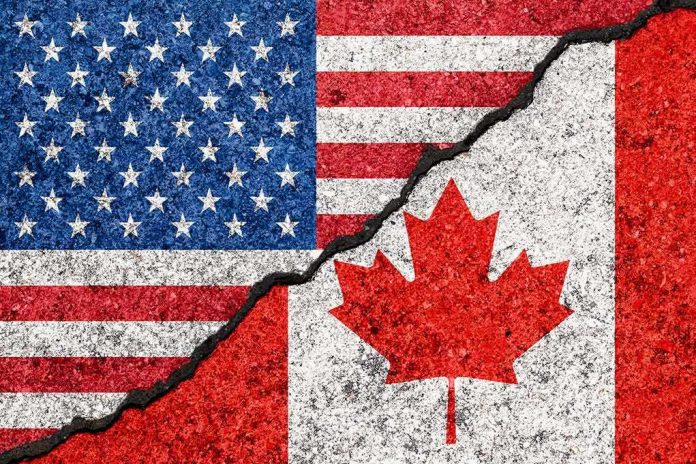
When a head of government says, calmly and on the record, that he has examined the “extreme tail risk” of an American military move against his country, he is not predicting war; he is showing you how real-world national security works when politics are volatile and interdependence is a vulnerability rather than a shield.
The Short Version
- Mark Carney said he considered a low-probability, nonzero risk of U.S.-led military action against Canada and prepared accordingly.
- His remarks came in an on-the-record New York Times interview and were echoed across mainstream outlets.
- The statement sits within a broader policy of reducing single-point reliance on the United States in defense and critical technologies.
- Planning for catastrophic but unlikely scenarios is standard in professional security institutions, even between close allies.
What Carney Actually Said, and Why It Matters
In a wide-ranging, on-the-record interview at The New York Times headquarters, Prime Minister Mark Carney acknowledged that his government had treated the possibility of U.S.-led military action as an “extreme tail risk” — a remote but consequential scenario that warranted preparation. “That’s not a base case,” he added, “but it would be irresponsible not to [prepare].” The phrasing was deliberate. Tail risk is the language of professional risk managers and military planners; it signals a serious internal process, not headline-chasing. Multiple independent outlets carried the same quotation, confirming that this was a public, intentional disclosure rather than an offhand remark.
That admission matters less for its sensational potential and more for its policy logic. Carney has been explicit about reducing Canada’s single-point dependence on the United States for key technologies — from satellite communications to combat aircraft — to shrink the attack surface of political coercion and operational vulnerability. The Times tied his statement to that broader strategy: resiliency by design rather than trust by default.
Mechanism: How Tail-Risk Planning Works Between Close Allies
Modern security planning assumes the improbable. Professionals inside defense ministries, joint commands, and national security councils maintain scenario libraries that range from routine disruptions to black swans. They do so precisely so political leadership never has to improvise at the edge of catastrophe. The U.S.–Canada relationship is unusually integrated — from the Permanent Joint Board on Defense, established in 1940, to NORAD’s binational command and the ad hoc Bi-National Planning Group that has examined continental defense seams. That integration reduces the plausibility of conflict; paradoxically, it also obliges both sides to map failure modes because the systems are so tightly coupled.
Carney’s choice to translate that internal discipline into public language does not conjure a threat into being; it aligns democratic accountability with the quiet reality of how militaries and national security bureaucracies earn their pay. As any senior planner will tell you, you prepare for the outliers precisely because you never want them to become your only option set.
Context: The Policy Shift Behind the Statement
The remark did not land in a vacuum. Earlier reporting detailed a decisive turn away from Canada’s minimalist, expeditionary posture toward a structure that foregrounds homeland defense and continental deterrence. That included tens of billions of dollars in planned spending for northern basing, sensors, and force rejuvenation — the hard infrastructure that tail-risk preparations depend on when a paper plan has to stand up in weather, distance, and time. Linking that trajectory to technology sovereignty, Carney has argued for diversifying away from single-vendor dependencies — notably U.S.-controlled satellite broadband — after observing how privately controlled platforms can shape battlefield realities in Europe. The argument is not anti-American; it is pro-resilience in a world where leverage often runs through supply chains, platforms, and standards.
This is the strategic through-line: shift from assuming benevolent stability to designing for contested interdependence. In that world, defense procurement, industrial policy, and alliance management are not separate files; they are the same problem wearing different uniforms.
What Was and Wasn’t Claimed
Carney did not allege imminent U.S. intent, disclose intelligence, or describe concrete U.S. planning; he characterized a contingency as low probability and treated it as a duty of office to examine. That is not semantics. It is the difference between warning of an attack and acknowledging that the largest military on earth, led by a president telegraphing hard-edged leverage in trade and security matters, creates a nonzero tail risk that should be mapped and mitigated. The interview’s contemporaneous, on-the-record nature, and the consistent reproduction of its key language by mainstream outlets, establish what was said and how he framed it.
The broader article tethered that risk-management stance to policy actions aimed at reducing single-point failures across defense and technology — the kind of programmatic follow-through that separates prudent planning from rhetorical theater.
History and Precedent: Friends Plan, Too
For readers surprised that democracies plan for conflict with allies, history is clarifying. Well before the modern alliance network made a U.S.–Canada war seem absurd, both countries maintained notional plans for worst-case dyads; serious historians and former officials have documented that habit of mind. The point is not that such plans forecast reality; it is that professionals treat the unimaginable as their baseline workload so elected leaders never have to. That discipline persisted even as NORAD, joint exercises, and binational mechanisms made the relationship a model of integrated defense.
In parallel, academic and professional literature shows how media framing can shift public reception from “responsible scenario planning” to “imminent invasion” merely by headline selection. Understanding that dynamic helps explain why an expert’s risk lexicon can mutate into a public’s anxiety lexicon when compressed into a clip or chyron.
Carney calls threat of US military invasion “extreme tail risk” in NYT a… https://t.co/NgdUvfj9KI via @YouTube
— Philip Hughes (@PHughes1971) September 24, 2026
Implications: Sovereignty, Procurement, and the New Risk Map
Treat the statement as a window into the next decade of Canadian policy. First, sovereignty will be operationalized through redundancy and optionality — second suppliers, diversified alliances, and domestic capacity where it matters. That elevates procurement from back-office process to national strategy. Second, continental defense will continue to migrate northward: sensors, bases, logistics lines, and hardened communications that work in the Arctic, not just the 49th parallel. Third, alliance management will be reframed around resilience: Canadians will want to be interoperable with the United States and Europe without being dependent on any single actor’s veto or leverage point.
The Bottom Line
Carney’s on-the-record acknowledgment did not predict conflict. It confirmed that Canada’s security leadership has moved from assuming away tail risks to budgeting for them — the only responsible posture when geopolitics is transactional, technology is a pressure point, and the cost of unpreparedness is measured in days you can never buy back. In that light, the most important word in his formulation was not “invasion.” It was “responsible.”
Sources:
insiderpaper.com, cbc.ca, winnipegfreepress.com, piquenewsmagazine.com, ctvnews.ca, europesays.com, theepochtimes.com, carleton.ca