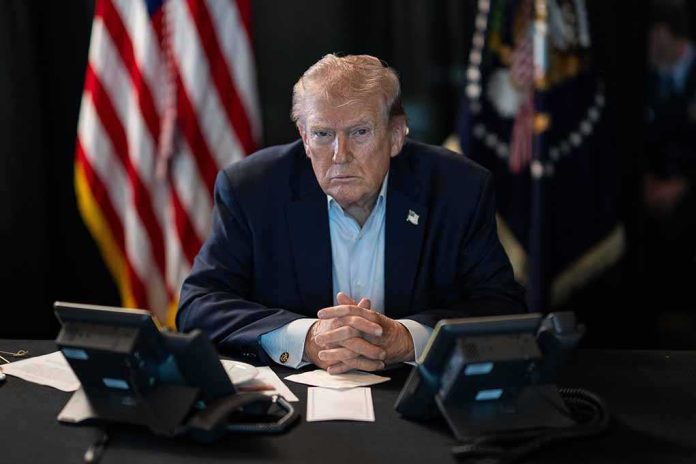
When a White House buys national airtime to showcase the president himself and labels it “Paid for by the U.S. Government,” the core question is not taste or tactics; it is whether appropriated funds crossed the legal line separating public information from partisan self-promotion. That line exists, it matters, and this episode spotlights how fragile—and enforceable—it really is.
The Short Version
- The White House confirmed a Trump-centered TV spot airing on Fox and elsewhere was funded with federal dollars and described it as a public service announcement.
- Senator Maggie Hassan demanded the ad’s cost, funding source, contracts, and agency roles, citing bans on taxpayer-funded “publicity or propaganda.”
- Major outlets reported the ad promotes Trump personally rather than conveying a discrete policy message, intensifying allegations of partisan use of funds.
- No formal ruling has yet found a legal violation; the case turns on purpose, content, timing, and the documentation that has not yet been released.
What Happened, and Why It Matters
The administration aired a professionally produced television spot featuring President Trump and patriotic themes, with an end card stating “Paid for by the U.S. Government.” A White House official confirmed federal funding and framed the spot as a public service announcement—educational, unapologetically patriotic, and not a campaign ad because it carried no call to action and Trump was not on any ballot. Multiple outlets reported the same description from officials. The point of law and ethics, however, is not the label applied but the function served: is the message advancing a governmental purpose or a political one?
Democratic Senator Maggie Hassan sent a formal request to the White House Chief of Staff seeking the ad’s cost, the precise funding stream, the contracting pathway, and any agency involvement. Her letter cites the recurring prohibition in appropriations law against using federal funds for “publicity or propaganda,” and questions whether the spot constitutes taxpayer-funded partisan promotion of a president. The letter signals a congressional oversight track aimed at retrieving records that can convert a rhetorical dispute into a documentable compliance finding.
The Legal Line: What the Government May Say with Your Money
Federal communications law and practice draw three overlapping boundaries. First, annual appropriations often include a “publicity or propaganda” rider: agencies may inform the public about programs, but may not use funds for partisan advocacy. Second, the Anti-Lobbying Act bars using appropriations to influence Congress directly or indirectly; mass persuasion to sway legislation can trigger that ban. Third, civil service rules, including the Hatch Act, restrict federal employees from partisan political activity in their official capacities. None of these regimes requires an explicit “vote for X” line to be implicated; intent and effect matter, as does whether the communication is policy-focused or personality-focused.
Historically, administrations have funded PSAs on identifiable governmental aims: Medicare enrollment, Affordable Care Act sign-ups, pandemic vaccination, disaster readiness. The message is informational, often with a clear call to a service or behavior Congress authorized. The controversy here is sharper because reporting describes the Trump ad as centering the president and his themes rather than a discrete program or action item—hence critics’ characterization as state-sponsored self-promotion rather than neutral public information. That distinction—programmatic information versus personal aggrandizement—is exactly where watchdogs and the Government Accountability Office tend to focus.
Evidence on Both Sides: What We Know and What We Don’t
The prosecution case, so to speak, rests on four pillars. First, taxpayer funding is uncontested; the spot carried a government-paid disclosure and officials affirmed federal financing. Second, timing and content look election-adjacent, with critics arguing the message promotes the president himself absent a linked policy action. Third, independent reporting cataloged commentary labeling it “state-sponsored political propaganda,” signaling the reception problem the White House must overcome. Fourth, the production raised collateral questions, including an artist’s claim that his music was used without authorization—evidence of potential sloppiness in process if not proof of a propaganda offense.
The defense case is clear, if narrow: the White House calls it a PSA, stresses no vote solicitation and no ballot presence for Trump, and invokes precedent—prior administrations also ran government-funded announcements. On paper, that argument exploits a real ambiguity in federal guidance: PSAs are permissible; partisan ads are not. But the label cannot carry the day by itself. The crucial facts—what account paid, who approved the creative, whether counsel cleared the content against appropriations and ethics constraints—are document questions. Until those records surface, both sides argue purpose from inference rather than from the authorizations and invoices that settle the matter.
The Documentation That Will Decide It
In disputes like this, a few specific records typically prove dispositive. The procurement and media-buy files reveal the account charged, the contracting vehicle, and the cost; an atypical use of a general management or Executive Office account for a personality-centered spot would heighten risk. The scope of work and creative briefs identify the stated purpose—public education about a program, or something closer to brand promotion of the principal. Legal clearance memos, if any, show whether counsel flagged propaganda-risk factors and whether decision-makers accepted that risk. Absent those artifacts, the debate plays out in talking points; with them, auditors can map purpose to payment and determine compliance. Senator Hassan’s letter is calibrated to force precisely this disclosure.
Two additional trails matter. First, placement strategy: invoices and AdImpact-type logs can show whether the buy targeted politically salient audiences—say, concentration on Fox News Sunday in the pre-election window—bolstering the inference of political rather than public-interest aim. Second, internal communications: emails and drafts sometimes reveal intent in plain language, including references to electoral effects, which GAO and ethics offices weigh heavily in propaganda determinations.
These people are fcking deranged.
Read "White House airs another government-funded ad, this time with Trump warning of ‘final battle’" on SmartNews: https://t.co/JP4GaejEd0 #SmartNews— MuskIsAPutz🌮 (@FascistMusk) September 27, 2026
How Past Fights Have Been Resolved
When GAO has evaluated federal communications, it has focused on three red flags: concealment of governmental sponsorship, “self-aggrandizement” of officials, and purely partisan content. The Trump spot disclosed sponsorship, which clears one hurdle. The second and third remain live: centering the president and advancing his personal political narrative—if that is what the creative does—is the heart of a self-aggrandizement or propaganda finding. The administration’s counter-argument—that patriotic messaging with no call to vote is per se educational—has surface appeal but is not a safe harbor if documents show the intent or expected effect was electoral. The absence of a call to action is relevant; it is not determinative.
Practical Implications and Guardrails Going Forward
For citizens, the takeaway is simple: a “Paid for by the U.S. Government” tag is not a moral permission slip. Your money can fund program education; it cannot lawfully subsidize the personal political brand of any officeholder. For institutions, the compliance checklist is equally straightforward. Start with a clearly authorized purpose tied to statute or program. Keep the principal off camera unless indispensable to the informational aim. Document legal review against appropriations riders and ethics rules. Avoid placements and timing that shadow a campaign’s targeting logic. Publish contracts and costs proactively; sunlight disciplines both message and spend.
Where this episode lands will likely turn on whether the paper record corroborates the administration’s PSA rationale or the critics’ propaganda claim. Right now, the undisputed fact is that federal dollars financed a president-centered ad, and the White House has chosen to justify it on patriotic-education grounds rather than program information. That is a precarious hill to defend without contracts, scopes, and legal memos to back it. Until those emerge, scrutiny is not only warranted; it is the accountability the law anticipates.
Sources:
mediaite.com, nytimes.com, yahoo.com, washingtonexaminer.com, nbcnews.com, thehill.com, finance.yahoo.com