
When medical care is delivered inside the U.S. Capitol by Navy clinicians who answer to the Defense Department but serve an office created by Congress, governance only works if oversight lines are explicit—and, for years, they were not.
At a Glance
- A Defense Department inspector general investigation found Congress’s Office of the Attending Physician (OAP) operated for years without proper Defense oversight of clinical quality and pharmacy controls.
- The gap traces to a post‑2013 realignment in military health governance that left Navy personnel embedded at the OAP without clear supervisory and compliance structures.
- Auditors flagged missing evidence of required pharmacy inspections and inventory checks—core control activities in any medical setting.
- Multiple sailors sought reassignment and filed complaints, underscoring why formal oversight and clear chains of authority matter in boundary organizations.
What the watchdog found and why it matters
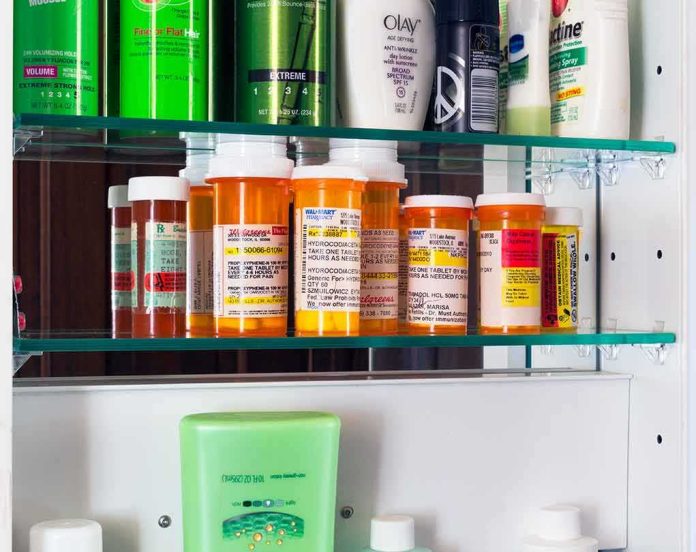
The Defense Department’s inspector general concluded that the OAP—a clinic staffed primarily by Navy medical personnel and responsible for caring for members of Congress, Supreme Court justices, and others—operated without the Defense Department’s routine oversight of clinical quality management and pharmacy operations for an extended period. In practical terms, auditors did not find evidence of required pharmacy inspections or inventory reconciliations, the basic safeguards that ensure medications are stored, dispensed, and tracked in compliance with federal and military standards. That may sound bureaucratic, but in healthcare these controls are non-negotiable: they prevent diversion of controlled substances, catch expired stock, and surface process failures before they harm patients. The inspector general’s office treats these domains as formal audit subjects across the military health system, not managerial niceties.
The inquiry also documented operational strain: multiple Navy personnel assigned to the OAP sought “health and safety transfers,” and at least one formal complaint was filed—signals that supervisory ambiguity was not an abstract governance flaw but a factor affecting staff welfare and risk tolerance. Taken together, the findings portray a high-profile clinical setting that slipped outside the Defense Department’s standard guardrails even as it continued to dispense care and medications to the nation’s top officials.
How a boundary organization lost its guardrails
To understand how this happened, start with structure. The Office of the Attending Physician is a congressional office historically led by a Navy medical officer detailed to Capitol Hill. That dual identity—congressional mission, Defense personnel—requires written arrangements spelling out who supervises clinicians, who inspects the pharmacy, and whose rules govern credentialing, quality assurance, and controlled substances. After 2013, military medicine underwent a major governance shift, including consolidation of certain functions under the Defense Health Agency. Amid those changes, the OAP’s embedded Navy staff apparently continued their Capitol mission without a corresponding, documented Defense oversight framework for clinical quality and pharmacy compliance. In the language of institutional design, the OAP became a “boundary organization”: mission authority in one branch, professional oversight in another. Without explicit lines, control gaps are predictable, and they surfaced here.
This is not a novel pathology. Defense auditors have repeatedly scrutinized medical supervision and pharmacy controls in other settings, from contract clinician oversight to wholesale drug inventory management, and have issued corrective actions when documentation or verification mechanisms were missing. A 2013 inspector general review, for example, addressed failures to verify physician-assistant supervision and recommended installing a health-services manager to ensure clinical oversight functions were performed; another report examined controls over wholesale drug inventories at the Defense Logistics Agency. The OAP case fits that lineage: predictable control failures where accountability was diffuse.
What was missing: the mechanics of clinical and pharmacy oversight
Healthcare oversight is a system, not a slogan. For clinics, clinical quality management encompasses credentialing and privileging, peer review, incident reporting, and continuous monitoring of key performance indicators (from medication errors to adverse events). For pharmacies, baseline controls include routine inspections, perpetual inventory for controlled substances, reconciliation of receipts and dispenses, segregation and disposal of expired stock, and discrepancy investigations. Auditors reported that expected inspection and inventory artifacts were absent at the OAP, which is exactly what you would see if the supervising entity never formally owned the job. That absence matters even when no adverse outcome is documented: internal controls exist to prevent harm and detect weakness early; their absence is the risk.
In Defense healthcare, these controls are codified and audited. The inspector general’s semiannual reporting and audit archive show a sustained emphasis on pharmacy dispensing controls and inventory management as enforceable requirements, not advisory guidance. When a clinic falls outside that regime—by jurisdictional accident rather than defiance—the effect is the same: no one is testing whether the safeguards work, and no one can prove they did.
Human consequences and institutional signals
The personnel signals around the OAP should be read as evidence that the control environment had degraded in ways visible to those doing the work. Requests for “health and safety transfers” are rare escalations; they communicate that staff perceive risks they cannot mitigate within the existing chain of command. Coupled with a formal complaint to the watchdog, those moves pulled the question of oversight from the abstract into the operational present and likely catalyzed the inspector general’s focus on the clinic. The reported resignation of the attending physician amid this scrutiny reinforces a broader point: when governance is unclear, accountability ultimately lands on leaders who must demonstrate that systems—not personalities—ensure safe care.
The episode also highlights how congressional offices rely on executive-branch institutions to deliver complex services. That reliance is sustainable only when oversight authority is unambiguous. Congress recognized as much in prior legislative proposals to formalize OAP oversight and appointment structures, including placing the office under the committees that run House and Senate administration and clarifying how Navy officers are selected and supervised for the role. While those bills addressed institutional design rather than pharmacy minutiae, they aim at the same failure mode the watchdog described: governance by custom rather than by charter.
What effective remediation looks like
Fixing a boundary-organization lapse is a design exercise. First, assign and publish ownership: designate the Defense component responsible for the OAP’s clinical quality program and pharmacy compliance, with named officials and reporting lines. Second, reconstitute the control stack: implement scheduled pharmacy inspections, perpetual controlled-substance inventory reconciliation, variance investigations, and corrective-action tracking, and bind them to Defense policies and audit readiness standards. Third, integrate clinical governance: credentialing and privileging under Defense regulations, incident reporting compatible with military health risk management systems, and periodic external reviews. Finally, lock the arrangement in law or memorandum: codify the oversight framework so future reorganizations cannot dissolve it by accident. None of this is novel; it is the same toolkit the inspector general has pressed elsewhere in Defense health to restore verification where it lapsed.
The point is not punitive. It is architectural. In settings like the OAP—high trust, high visibility, small footprint—controls can seem optional until something goes wrong. The inspector general’s findings are a warning against that complacency and an invitation to return the clinic to the same auditable standards the Defense Department applies across its medical enterprise.
CONGRESS TREATED @USNavy SAILORS AT THE OFFICE OF ATTENDING PHYSICIAN AS ITS PRIVATE MEDICAL CONCIERGE, WHILE SAILORS WERE FORCED TO WORK IN A HOSTILE ENVIRONMENT.🤮
💯UNACCEPTABLE!
According @MilitaryTimes interviews with sources, CONGRESS arguably acted DEPLORABLY >10 YEARS… pic.twitter.com/AVg6zaY3Je
— L Ortiz (@l_ortiz81888) November 13, 2026
The broader lesson for cross-branch services
Congress depends on executive-branch expertise for many in-house functions, from security to medical care. Each of these arrangements should be evaluated against the OAP stress test: if the personnel work for one institution and the mission belongs to another, where do professional standards, compliance monitoring, and corrective action live? The Defense Department has the machinery to run those systems; Congress has the authority to require them inside its own precincts. Aligning the two is not a nicety—it is how you ensure that care delivered under the Capitol dome is governed as rigorously as care delivered on a military base.