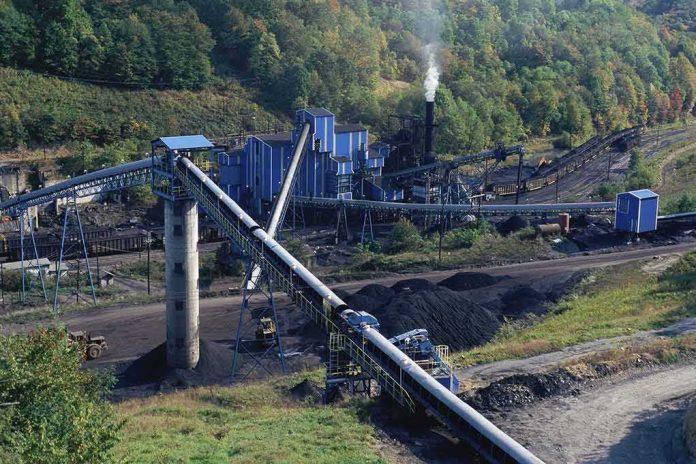
When a country’s heavy industry is concentrated in a handful of blast-furnace complexes, a targeted campaign against those nodes can throttle the entire sector in weeks; Ukraine’s steel collapse is a textbook case of concentration risk under wartime pressure.
The Short Version
- Three flagship mills that produced the overwhelming share of Ukraine’s steel have been knocked offline by repeated missile strikes, forcing production halts.
- Company statements and industry data align: output plunged and force majeure was triggered on contracts as plants assessed extensive damage.
- “No steel industry” is rhetorical shorthand for a near-total shutdown of integrated capacity; limited residual production and mining may persist, but the backbone is disabled.
- The damage is compounded by logistics constraints, power insecurity, and trade headwinds that obstruct any rapid restart.
What the evidence supports: an integrated steel backbone taken offline
In an integrated steel system, blast furnaces, coking batteries, sinter plants, power substations, rail links, and rolling mills form a single organism. Disable a few critical organs and the whole body fails. That is what happened to Ukraine’s steel backbone. Metinvest, the country’s largest mining and steel group, reported a direct ballistic strike on Kamet Steel that “forced the plant to halt all production processes,” after damaging key facilities and infrastructure and killing and injuring workers. Zaporizhstal, another Metinvest asset and one of Ukraine’s largest steelworks, absorbed multiple ballistic barrages in August and September; the company and multiple outlets reported a complete shutdown as production chains were severed and attempts to recover were met with new strikes, culminating in a fourth attack in just over a month. Industry tracking showed output collapsing in the same period as the largest producers curtailed or stopped operations.
These are not ambiguous reports or mere rumors. They are named plant-level disclosures and corroborated wire coverage that describe production halts, casualty counts, and damaged process units—events that industrial practitioners understand as immediate showstoppers. When blast furnaces go cold, restarts are non-trivial: refractories crack, hot stoves lose integrity, and upstream coke and sinter supply chains must be requalified. Weeks can become months.
How the sector’s structure magnified the shock
Before the war, Ukraine’s steel output was unusually concentrated in a few integrated complexes anchored in the southeast. That structure optimizes scale in peacetime but is brittle under precision attack. Public statements tied to Metinvest and ArcelorMittal, cited across outlets, describe three main mills that together accounted for roughly 90% of domestic steel production; all three were halted following ballistic strikes that targeted blast furnaces and related infrastructure. In parallel, Metinvest indicated it would declare force majeure on portions of its contracts after Zaporizhstal and Kamet Steel were forced to halt—an extraordinary step that signals not just inconvenience but impossibility of performance under war risk.
The physical logic matches the numbers. Ukraine’s August crude steel output fell by more than half year-on-year as these integrated assets went offline—one of the worst monthly figures since the full-scale invasion began—reflecting the removal of high-volume capacity rather than incremental slowdowns. Strikes on ArcelorMittal Kryvyi Rih, the country’s largest mill, reinforced the point: this was a campaign against the pillars, not the periphery. In that context, the assertion from a Metinvest executive that “as of today, Ukraine no longer has a steel industry” reads as blunt shorthand for the effective loss of the integrated core, not a literal claim that no steelmaking anywhere remains.
Mechanism of disablement: why a few hits can fell a giant
Integrated steelmaking is an energy- and logistics-intensive choreography. Ballistic impacts that crater a coke battery or sever a high-voltage feed do more than dent buildings; they break process continuity. Unscheduled furnace shutdowns risk scaffolded accretions of solidified iron and slag—“dead men”—that require drilling and mechanical excavation before any restart. Knock out internal rail spurs and finished coils and slabs cannot move; damage water and gas systems and the safety envelope disappears. Zaporizhstal’s repeated strikes, spaced days apart, exemplify a classic denial strategy: hit recovery crews while they’re still tracing faults, ensuring downtime hardens into incapacity.
Insurance and safety regimes then add friction. After fatal strikes, management must reassess risk tolerances, negotiate with insurers and lenders, and secure replacement transformers, stoves, or refractory modules—components with long lead times even in peacetime. Announcing force majeure is, in effect, an admission that these constraints are binding for the foreseeable future.
Context beyond the missiles: ports, power, and trade barriers
War damage alone would be punishing; layered constraints make it systemic. Ukraine’s metallurgical complex has contended with maritime export bottlenecks, intermittent power availability, and strained rail corridors since the first months of the invasion. Each shock compounds the others. Even if a furnace can be patched, exporting slabs and coils without dependable Black Sea routes or predictable grid power is a marginal proposition. Contemporary reporting during the shutdowns made the same connection: the month output cratered was also a month defined by logistics strain and renewed strikes across industrial nodes.
European market conditions add a final headwind. Post-2022 trade remedies and environmental compliance costs in destination markets have tightened margins for Ukrainian producers already paying a “war risk” tax in energy, insurance, and transport. The result is a restart calculus skewed toward caution: why absorb restart losses, safety risks, and capital repairs to feed a market that may not clear your product at workable prices?
Competing framings and what they get right or wrong
Two narratives circulate. The first—grounded in company statements, wire reports, and production data—holds that Ukraine’s primary steel capacity is effectively offline after targeted strikes. The second challenges absolutist phrasing such as “no steel industry,” warning that such language collapses plant-level disasters into a claim of total annihilation. The evidence favors the first on substance and concedes the second on semantics. There is no credible counter-report showing major integrated mills running at normal output; there is ample, specific reporting of production halts and serial damage at the country’s largest facilities. At the same time, “no industry” is rhetoric, not an audited statistic—residual capacity in electric arc shops, rolling lines using imported slabs, mining, and scrap processing can persist. Precision matters: the integrated backbone is disabled; niche and upstream activities may flicker on.
What recovery would actually require
Real recovery is not a press release; it is a capital plan. First, physical repair: new transformers, hot stoves, refractory relines, rebuilt coke batteries, restored substations, and cleared internal rail. Second, protection: hardened power feeds, redundant substation design, blast shields for critical control rooms, and layered air defense to deter repeat strikes. Third, logistics and market access: stable maritime corridors or alternative rail corridors with predictable capacity, plus commercial clarity on EU market access and carbon-related compliance. Finally, working capital and insurance—without credible war-risk cover and backstopped cash flows, boards will not greenlight hot restarts. Until several of these conditions align, declarations of force majeure will define the export side of the business.
The bottom line for Ukraine’s economy
Steel is not just another sector for Ukraine; it is a tradables engine, an employer, a foreign-exchange earner, and a backbone customer for mining, rail, and energy. Taking the integrated mills offline compresses tax receipts, chokes freight revenues, and cascades into ore and coal demand. Substituting imports or diverting ore exports cannot fill that hole. The near-term path is stabilization, not renaissance: protect what can be protected, repair what is repairable, and redesign plants and logistics around a wartime reality in which concentration is a vulnerability, not an advantage. The rhetoric of “no industry” will ebb once furnaces relight and coils ship reliably. The engineering and security preconditions to reach that day are the real story the evidence insists on.
🇺🇦❗️“Ukraine no longer has a steel industry.” Factories that produced 90% of Ukraine’s steel are idle after Russian strikes, – FT
The shutdown of enterprises that employ more than 15,000 people in total could have significant side effects “and a huge impact on tax revenues.”… pic.twitter.com/X0pP6xk0W6
— Dzis Maksym (@DzisMaksym) September 20, 2026
Sources:
thegatewaypundit.com, hromadske.ua, mezha.net, reuters.com, metinvestholding.com, steelorbis.com, biz.liga.net, en.interfax.com.ua, newsukraine.rbc.ua