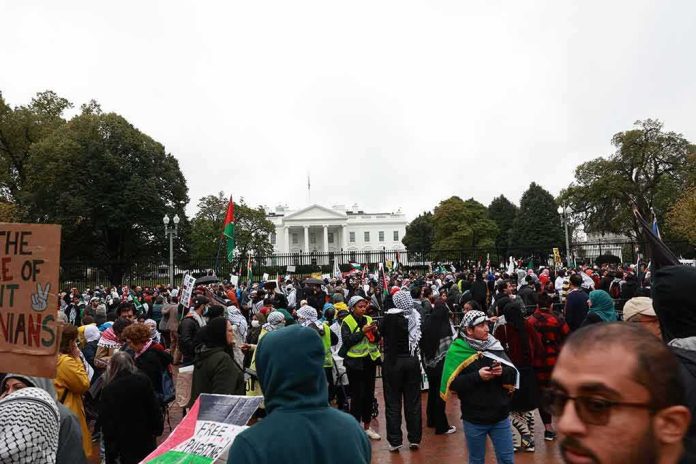
Bill Maher’s core charge isn’t that Democrats secretly hate Jews; it’s that parts of the party have learned to tolerate rhetoric and incentives that normalize hostility toward Israel and, in practice, indulge antisemitism’s spread—and that party leaders have been too cautious in confronting it.
The Short Version
- Maher has built a multi-year case that Democratic rhetoric and incentives around Israel are giving cover to antisemitism inside the party’s ecosystem.
- He points to cultural signals—shunning AIPAC money, demonizing Israel as uniquely “dirty” or “monstrous,” and online youth politics—that blur criticism of policy into animus toward Jews.
- Countervailing evidence exists: the DNC formally condemned rising antisemitism in 2025 and rejected an Israel arms-embargo resolution that omitted Hamas.
- Polling shows Democratic views of Israel have shifted sharply negative, while American Jews remain largely Democratic but divided on how antisemitism and Israel debates interlock.
Maher’s Thesis: Indulgence, Not Edict, Drives the Problem
Across monologues, panel exchanges, and the show’s Overtime segments, Maher’s argument has been consistent: Democrats are not issuing party-line edicts against Jews; rather, they are permitting an environment in which the vilification of Israel collapses too easily into animus toward Jews, and leaders are reluctant to draw hard lines. He has framed the party’s distancing from pro-Israel organizations as a signal—intended or not—that Israel is a “monster country” and support for it “dirty,” a message that “gives permission” to people already inclined toward antisemitism to feel validated. He has also tied this to youth-driven online politics and the incentives of social media outrage, which reward maximalist slogans that erase distinctions between policy critique and identity-based contempt.
Maher’s program has aired specific cases of dehumanizing speech about Zionists and Israel alongside far-right antisemitism, arguing that the left’s moral license on the issue is corrosive because it claims the mantle of human rights while flattening a complex national conflict into a single villain. The through-line is not a prosecutorial tally of Democratic votes; it’s a cultural brief about what party elites tolerate because the costs of confrontation—activist backlash, donor blowback, or intracoalition fracture—feel higher than the benefits of clarity.
What Counts as Evidence of a Party Problem?
Two kinds of evidence deserve weight. First, on-air claims from the principal critic, which we can sample directly from Maher’s segments. Those clips show him pressing Democrats by name and criticizing decisions—especially around AIPAC and Israel framing—that he believes turn support for Israel into a character defect inside progressive spaces. Second, behavioral indicators inside Democratic politics: candidates announcing they will not take AIPAC checks, activists casting Zionism as inherently racist, and online environments where anti-Israel maximalism is a marker of in-group virtue. Maher treats these as reinforcing signals that support his thesis. The empirical limit is clear: these signals do not constitute proof of a formal party embrace of antisemitism. They do, however, describe a permissive environment that influential Democrats have struggled to police effectively.
This distinction matters. Calling a party “antisemitic” as an institution demands harder proof—platform planks, leadership statements, coordinated directives. The stronger version of Maher’s claim is cultural and incentive-driven: when leaders go quiet as their base adopts rhetoric that reduces Israel to a stain on the world and those who defend it to moral pariahs, antisemitic actors hear, rightly or wrongly, that they are among friends. That is the indulgence charge.
The Counter-Case: Formal Condemnations and Divided Democrats
There is documented counter-evidence that complicates any totalizing indictment. In 2025, the DNC Resolutions Committee passed a resolution condemning rising antisemitism and rejected an arms-embargo proposal on Israel that failed to condemn Hamas; Jewish Democratic leaders publicly applauded those moves as proof the party still draws lines. Capitol Hill provides similar snapshots: House Democrats have backed measures denouncing antisemitism—even as a minority resisted GOP-framed resolutions that, for them, blurred policy debate with identity claims. The resulting pattern is less a simple abdication than a party split over definitions, tactics, and authorship of the condemnations.
Polling underscores the strategic bind. NBC reported that by early 2026, nearly 60% of Democrats viewed Israel negatively, a sharp shift from the immediate post–Oct. 7 period. Separate surveys of American Jews, meanwhile, show a community that remains largely Democratic but is simultaneously concerned that criticism of Israel can shade into antisemitism and, conversely, that accusations of antisemitism are sometimes used to shut down legitimate debate. That ambivalence—support for Israel’s right to exist alongside deep disagreement over Netanyahu-era policy—maps directly onto the party’s messaging challenges.
Mechanism: How Rhetoric, Money, and Movement Incentives Interact
Maher’s strongest analytic move is to connect three systems. First, rhetorical inflation: when activists or politicians characterize Israel as uniquely malevolent—“apartheid,” “genocidal,” “colonial” in an absolute sense—mundane policy arguments are displaced by moral totalization, and ordinary supporters of Israel become complicit by association. Second, money and signaling: refusals to accept AIPAC contributions are presented by some Democrats as a corruption stand, but the symbolic read inside movement spaces can be that engagement with mainstream pro-Israel institutions is taboo, which hardens factional identity. Third, platform dynamics: youth-dominated feeds reward categorical claims and ritualized denunciations; officials who attempt nuance are accused of betrayal, so many choose silence. Silence functions as permission.
In that ecosystem, antisemitism does not need an official imprimatur; it flourishes through tolerated tropes, asymmetric scrutiny, and the absence of muscular counterspeech from leaders with standing to set norms. That is why Maher keeps asking, “Where are you?”—a challenge less about passing a single resolution than about everyday boundary-setting when the cameras aren’t rolling.
There are 10 Jewish US senators: Bennet, Blumenthal, Ossoff, Rosen, Sanders, Schatz, Schiff, Schumer, Slotkin, and Wyden, They are all Democrats. There are ZERO Jewish GOP senators.
Bill Maher routinely claims there’s rampant antisemitism in the Democratic Party, its total bs. https://t.co/LKU6WrGGkp
— Code Name Pending (@marciarusso) August 22, 2026
Where the Real Disagreement Lies
The serious dispute isn’t over whether antisemitism exists on the left—it does, as it does on the right—but over classification and enforcement. Progressives argue that condemning Israeli government policy is not antisemitic; they fear weaponization of the charge to shield a foreign government from accountability. Maher, by contrast, argues that in practice much of the current rhetoric crosses the line from policy critique into identity-based vilification, and that Democratic leaders have failed to enforce the boundary with the urgency they bring to other forms of bigotry. The DNC’s 2025 resolution shows the institution can act; Maher’s case is that the culture often does not. Both claims can be true at once.
Implications: The Coalition Costs of Ambiguity
For Democrats, ambiguity carries two risks. The first is normative: if antisemitic frames are allowed to mingle unrebuked with progressive language, the party’s moral credibility erodes. The second is electoral: Jewish voters remain disproportionately engaged, philanthropic, and politically active; even if most continue to vote Democratic, a sense of estrangement can depress enthusiasm and fracture local coalitions. Meanwhile, the broader electorate hears mixed signals on a volatile foreign-policy issue as polls record steeply negative Democratic sentiment toward Israel. That is combustible politics.
Maher’s through-line isn’t a courtroom indictment; it is a demand for custodianship of liberal norms. The evidence shows he has repeatedly, publicly pressed Democrats to draw brighter lines, while the party can point to formal condemnations and some corrective actions. The unresolved work—the everyday boundary enforcement where rhetoric, money, and identity collide—remains the test. On that score, Maher’s challenge stands.
Sources:
pjmedia.com, thegatewaypundit.com, foxnews.com, youtube.com, facebook.com, breitbart.com, washingtontimes.com