
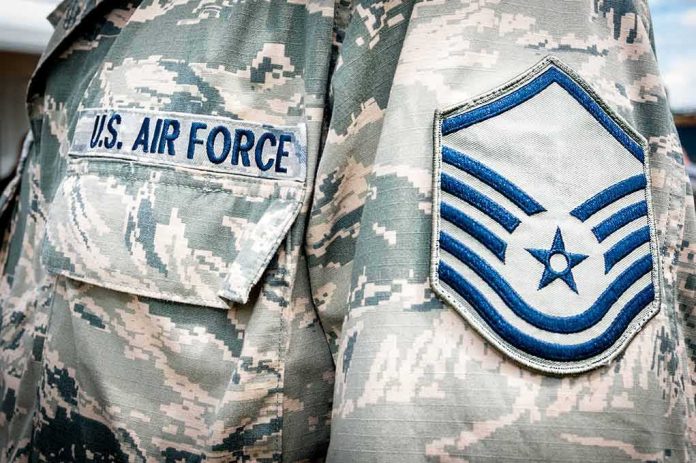
In modern war, the headline number of “combat deaths” rarely captures the full human cost; the Pentagon’s own records show that non-hostile losses—illness, accidents, and other causes not directly tied to enemy fire—shape the toll and the public’s understanding of a conflict as decisively as battlefield fatalities.
At a Glance
- Two recently recorded U.S. Air Force deaths tied to the Iran conflict are classified as non-hostile in the Pentagon’s casualty database, raising the total U.S. overseas war dead associated with this fight to 23.
- One airman died of illness or injury after medical evacuation to the United States; the second died in the Middle East and is listed as non-hostile with cause pending.
- Both were assigned to U.S. Central Command operations; one was active duty, the other a member of the Air National Guard.
- “Non-hostile” is a technical category; it excludes direct enemy action but does not mean a death is unrelated to deployment or wartime conditions.
What the official record says—and what it means
The Defense Casualty Analysis System (DCAS), the Pentagon’s official ledger for American war dead, records two recent Air Force fatalities tied to the ongoing Iran conflict as non-hostile losses. Public reporting that draws from DCAS and service statements indicates that one airman’s cause is categorized as illness or injury and that the individual died after medical evacuation to the United States. The second airman’s death occurred in the Middle East and is listed as non-hostile with the cause pending while the investigation runs its course. According to the same reporting, one of the deceased served on active duty and the other was a member of the Air National Guard, and both were operating under U.S. Central Command (CENTCOM). These two cases bring the total U.S. death count associated with the conflict to 23, a figure that aligns across independent defense outlets referencing the same official data set.
To the lay reader, “non-hostile” can sound like “not war-related.” That is not how the Department of Defense uses the term. In casualty accounting, “hostile” means death directly caused by enemy action or terrorism; “non-hostile” encompasses all other causes—disease, accidents, environmental exposure, and similar mechanisms—not directly triggered by enemy fire. That distinction is codified in federal analyses of Defense Department terminology and governs how the military classifies and reports fatalities. The two new entries, in other words, are recognized as part of the wartime toll even though neither is attributed to direct hostile fire.
How the classification works within the Pentagon’s system
DCAS is built to answer two different questions: what caused a death, and to which operation the death is attributed. Cause is divided into hostile and non-hostile; attribution assigns the case to a named operation or to broader Overseas Operations. In this instance, defense reporting indicates that the Pentagon is attributing both deaths to Overseas Operations rather than to Operation Epic Fury—a delineation reportedly driven by the department’s determination that Epic Fury has concluded—but the aggregate wartime count remains 23 when categories are combined. For families, commanders, and historians alike, that accounting discipline matters. It allows analysts to separate causation from context—mechanism from theater—without losing sight of the fact that deployment conditions often shape outcomes in non-trivial ways.
The illness/injury categorization for one airman and the pending, non-hostile assessment for the other reflect standard practice. Medical evacuations that culminate in death are recorded in DCAS with the proximate cause and the relevant theater attribution. When the cause is not yet established to a reportable standard—such as awaiting autopsy findings or a line-of-duty determination—the database uses a pending placeholder under the non-hostile umbrella until the investigative record closes. That process is designed to prevent premature or erroneous public coding while maintaining transparency on the existence of a casualty.
Why non-hostile deaths are part of the wartime story
The distinction between hostile and non-hostile deaths clarifies mechanism, not meaning. Historically, non-hostile losses mount in conflict for predictable reasons: tempo, austere environments, complex logistics, and the physiological and psychological strains of sustained operations. Across the post‑9/11 wars, independent scholarship has emphasized that the military’s narrow “killed in action” line understates the broader mortality associated with war. Brown University’s Costs of War project, for example, has found that suicide deaths among active-duty personnel and veterans of those conflicts have been several times higher than combat deaths—an arresting ratio that underscores how the burdens of war extend far beyond engagements with the enemy. The two Air Force deaths recorded here fit that long-observed pattern in which non-hostile casualties carry as much human and institutional consequence as those inflicted by opposing forces.
This is not merely an academic point. Command-directed safety programs, medical surveillance, aviation risk controls, and deployment health policies exist precisely because non-hostile factors—heat injuries, vehicle mishaps, maintenance accidents, undiagnosed illness—take lives in war zones. When DCAS numbers move, even by two, the duty is to ask why and whether the conditions that contributed are remediable.
Context: the Iran conflict’s operational frame
The 23-fatality total cited by defense outlets is a function of how the Pentagon aggregates across categories and time periods linked to the Iran conflict. Reporting has chronicled episodic U.S. strikes, Iranian attempts to target U.S. aircraft and facilities, and a sustained, if deliberately calibrated, exchange of force in and around the CENTCOM area of responsibility. Within that operating picture, Air & Space Forces Magazine detailed that 15 deaths occurred during Operation Epic Fury and eight afterward, aligning with Military Times’ accounting that yields the same composite total from Pentagon data. Those numbers are best understood as a running balance sheet of a still-evolving campaign rather than a closed ledger.
The organizational detail—one active-duty airman, one Air National Guard member—also matters. Guard and Reserve forces have been integral to every major U.S. operation for decades, and their casualty profiles often include non-hostile mechanisms tied to the same austere deployments and demanding mission sets faced by active-duty units. The reporting that both airmen were assigned to CENTCOM operations is a reminder that, in practice, the total force shares the same risks when mobilized to the same theaters.
What we know now—and what follows
As of the latest official accounting and corroborating defense press, two airmen tied to the Iran conflict are recorded in DCAS as non-hostile casualties—one from illness/injury after evacuation to the United States, the other in the Middle East with cause pending—and the U.S. death toll linked to the conflict stands at 23. The Air Force has confirmed that one was active duty and one was in the Air National Guard, and that at least one death occurred within CENTCOM’s area of responsibility. While the Air Force had not publicly released the names at the time of reporting, the core facts of classification, attribution, and aggregate counts are consistent across sources. A brief caveat applies: in one case the cause remains under investigation, a normal step before a final entry replaces the “pending” placeholder.
The larger lesson is enduring. Casualty categories illuminate but do not diminish loss. A death coded as non-hostile can still be inseparable from the pressures and particulars of deployment. Policymakers should resist the intuitive but misleading conflation of “combat death” with “war death,” and the public should read the numbers with that nuance in mind. In every conflict, the military’s duty is twofold: defeat the adversary and suppress preventable harm within its own ranks. The accounting system is not just a ledger; it is a feedback loop. Used well, it points leaders to the places—medical screening, safety culture, training fidelity, operational pacing—where interventions can save lives before the next entry appears.
Sources:
militarytimes.com, airandspaceforces.com